The stalemate created by trench warfare on the Western Front forced military planners and thinkers to brainstorm new and inventive ways to overcome static lines of defense. While the Germans opted to use specially trained infantry operating in assault squads to break the gridlock, the French and British began experimenting with the use of what would eventually become known as tanks. These treaded, powerful vehicles, impervious to small arms fire would eventually come to dominate land warfare during the 20th century.
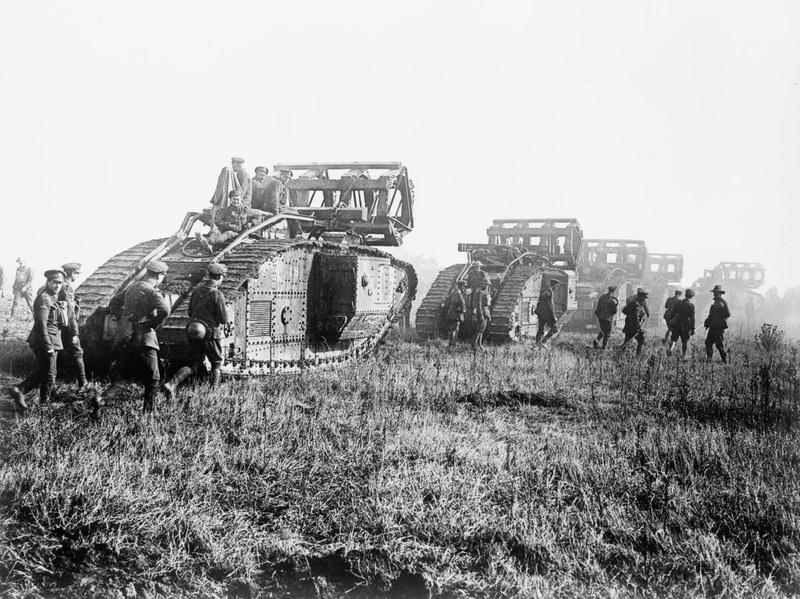
Tanks were first introduced onto the battlefield during the Battle of the Somme on September 15th. Rolling over trenches and through infantry obstacles, machine gun and rifle fire ricocheted harmlessly over the behemoth’s metal skin. The German infantry who first faced these were rightfully terrified, yet these first tanks were prone to breaking down. Thus after an initial shock, the Germans soon learned to deal with the clumsy machines (1).
“Something was brought [up] near the reserve trench, camouflaged with a big sheet. We didn’t know what it was and were very curious and the Captain got us all out on parade, He said, ‘You are wondering what this is. Well it’s a tank’ and he took the covers off and that was the very first tank. He told us what we had to do when we made the attack at Zero Hour was just to wait for the tank to go by us and all we had to do was mop up, and consolidate our trench. Well we were all at the parapets, waiting to go over [the top] and waiting for the tank. We heard the chunk, chunk, chunk, chunk, then silence! The tank never came.”- Private Charles Cole, Coldstream Guards, 1916
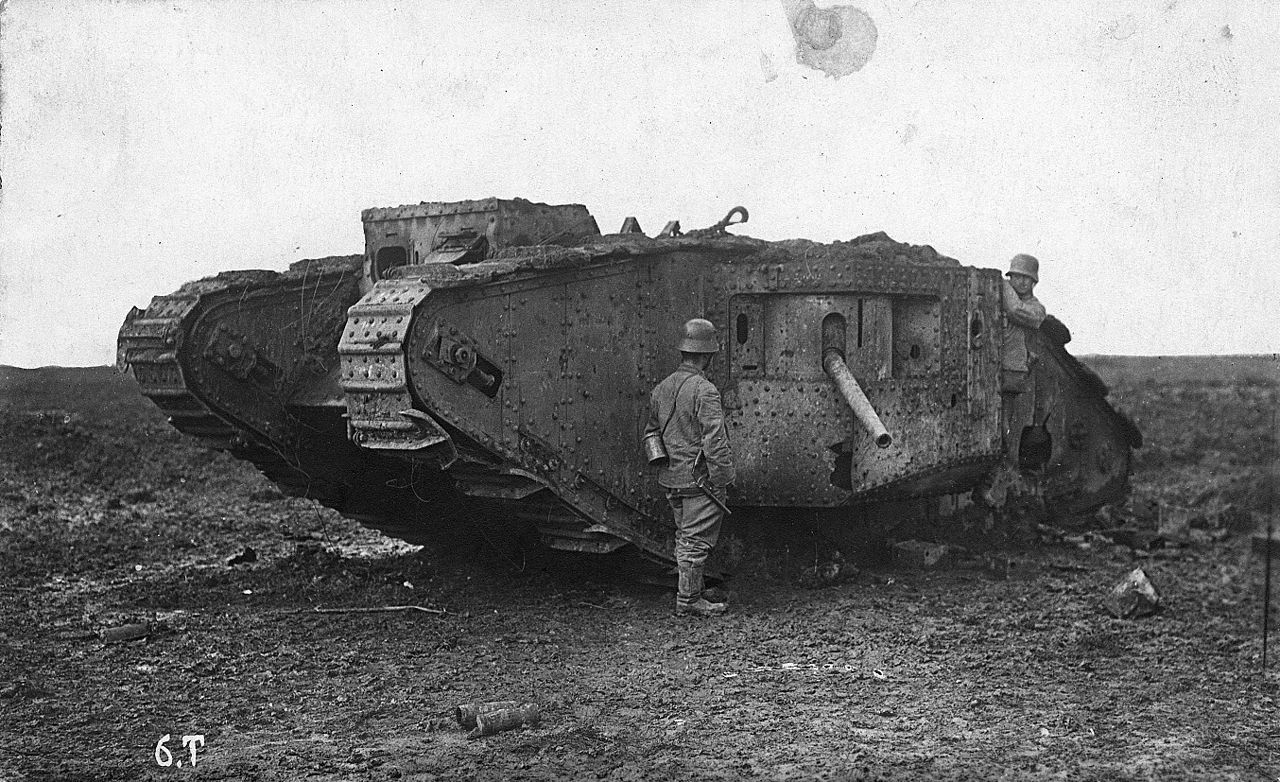
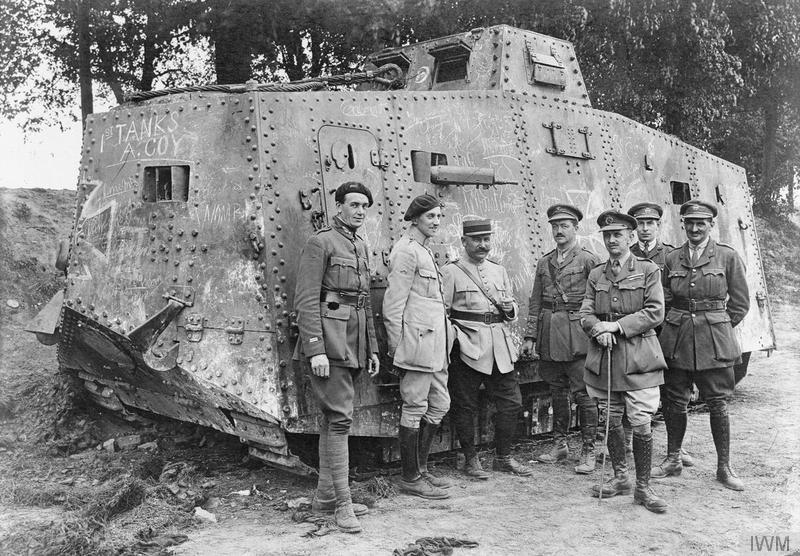
As occurred with the early British tanks, those employed by the French had similarly poor first appearances. Despite their powerful engines and treads, they easily became trapped in the mud and made easy targets for field gun crews. The German high command viewed these early failures as evidence of the weakness of tanks as a weapon (2). As a result the Germans produced very few tanks of their own, instead using captured British and French tanks for their own purposes where it suited them.
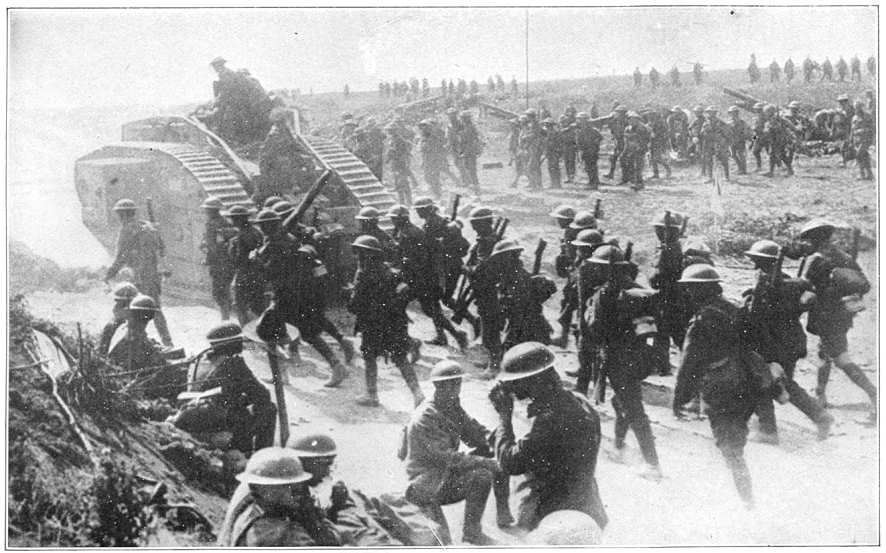
It wasn’t until the Battle of Cambrai in November, 1917 that the tanks truly showed their potential when being used en masse against enemy defensive positions. Attacking the German Hindenburg Line, 324 British tanks were able to completely surprise the defenders and easily overcome their advanced positions (3). Only after making large advances through enemy territory did the British run into a well defended ridge line, where German field guns were able to fire from covered positions on the advancing tanks did the assault falter (4). Even still the battle offered further means of improvement for the tanks. As the battle planners viewed the tanks as untrustworthy the plan did not call for close coordination of infantry and tank. Rather than the tanks supporting the infantry advance, and the infantry protecting the tanks from flanking artillery the two worked separately with poor results (5). Such mistakes were not to be repeated.

On August 8th, 1918 at the Battle of Amiens, 450 tanks led the way to a decisive allied victory. Working in close coordination with infantry and cavalry units, the tanks proved their worth as they quickly overwhelmed surprised enemy defenders. The tanks and cavalry were attached to one another, the tanks taking the lead where enemy pillboxes were encountered while the cavalry charged ahead where resistance was light (6). Tanks had proven their true worth, and had performed admirably on the battlefield. If Cambrai were Lexington and Concord, then Amiens was Yorktown; the age of tanks had truly been ushered in.
- Balck, William, Development of Tactics- World War, 1922, pg. 75.
- Zabecki, David T. “Military Developments of World War I .” International Encyclopedia of the First World War.
- Keegan, John, The First World War, 1998, pg. 370.
- Anderson, Alan, Patricia Byran, Charles Cannon, Barbara Day, and Julie Jeffery, “An Experiment in Combat Simulation: The Battle of Cambrai, 1917,” The Journal of Interdisciplinary History 2, no. 3 (1972): 229-47, pg. 234
- Ibid, pg. 235.
- Marshall, S.L.A, World War I. 1964, pgs. 414-417.