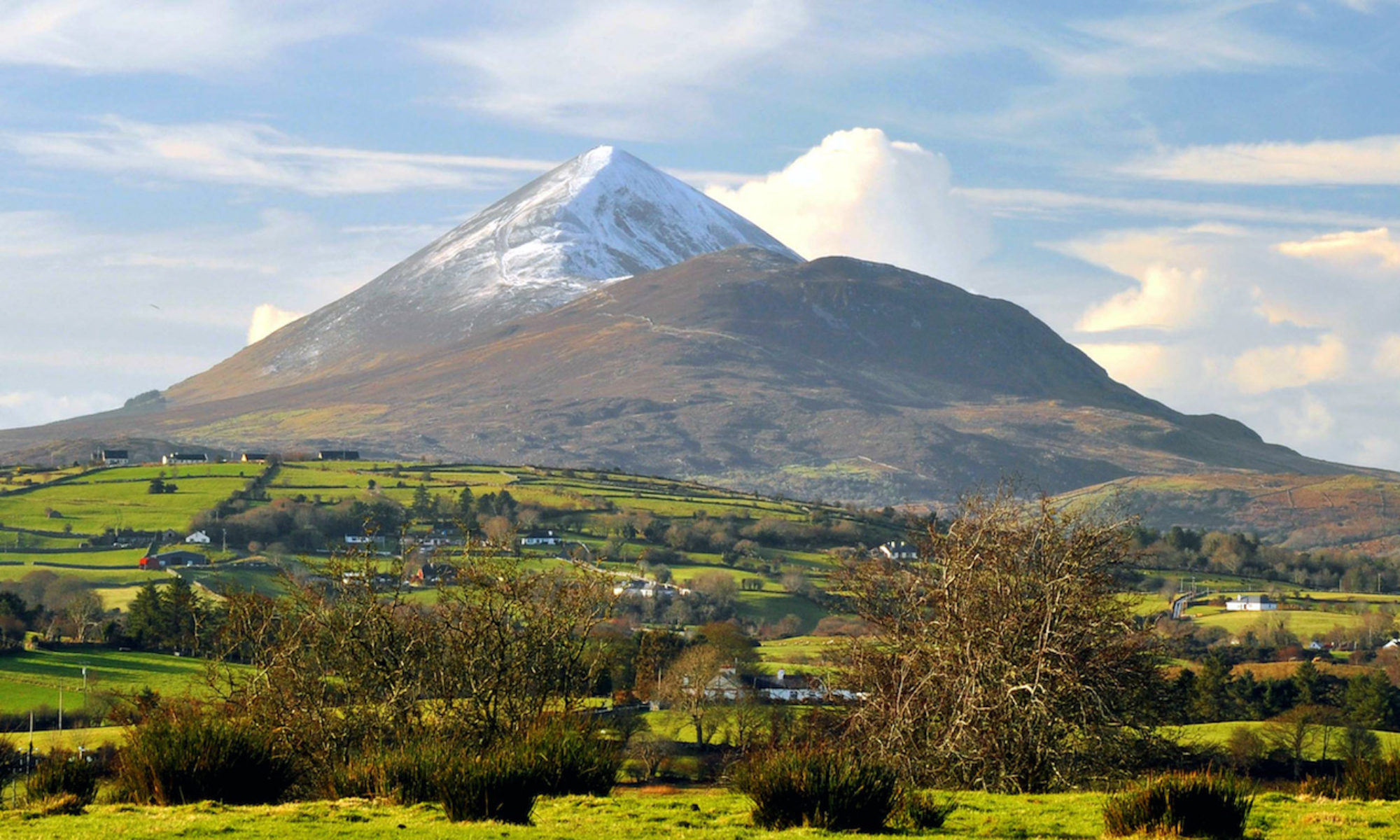
“I believe that the value of the horse and the opportunity for the horse in the future are likely to be as great as ever. Aeroplanes and tanks are only accessories to the men and the horse, and I feel sure that as time goes on you will find just as much use for the horse – the well-bred horse – as you have ever done in the past.”- Field Marshall Douglas Haig, 1926
Most military historians when asked about World War I will claim that it was the first truly modern war. Machine guns, artillery that could fire over miles, automatic infantry rifles, gas attacks, tanks, and airplanes all made their appearances throughout the war. So, in a war marked by modernization and mechanization at almost every turn it would probably come as a surprise to many that cavalry were still employed in the Great War.

One may point out that the opening year of the war was one in which outdated methods and ideologies of warfare were destroyed almost as quickly as the lives that were expended proving their uselessness. Therefore the expectation would surely be that cavalry would be among these fatalities of modernity. Quite surprisingly this was not the case. Though gone were the days where massed cavalry charge could deliver the coup de grâce and offer a general a decisive victory, the cavalrymen of World War I proved themselves to be an adaptable breed of soldiers that could fulfill a number of roles for commanders.
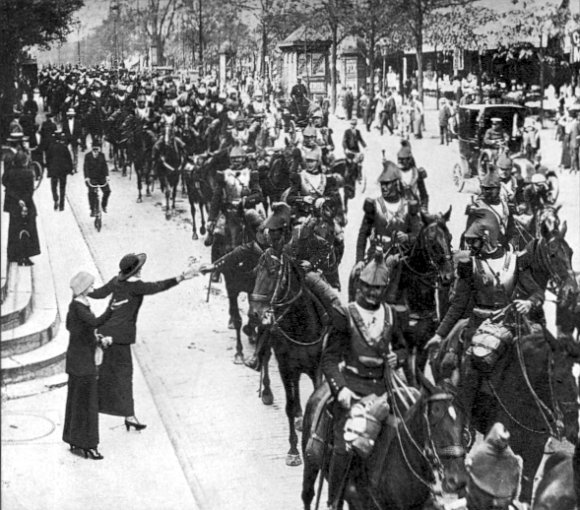
Even before World War I began, reformers in armies like that of Great Britain were beginning to seriously question the shock ethos of the cavalry wing. They contended that as firepower increased horsemen would no longer be able to deliver killing blows with a massive charge, and as such should be trained in the use of rifles. Countering this argument, an anti-reform movement led by future Field Marshals Sir John French and Sir Douglas Haig argued that cavalry used as mounted infantry had failed disastrously in the Russo-Japanese War of 1904-1905. The result was a compromise of British cavalry doctrine issued in 1912. This stated that while rifles could be used to the cavalrymen’s advantage, a good officer should be able to find opportune moments to deliver a decisive and expedient victory by way of massed cavalry charge(1).
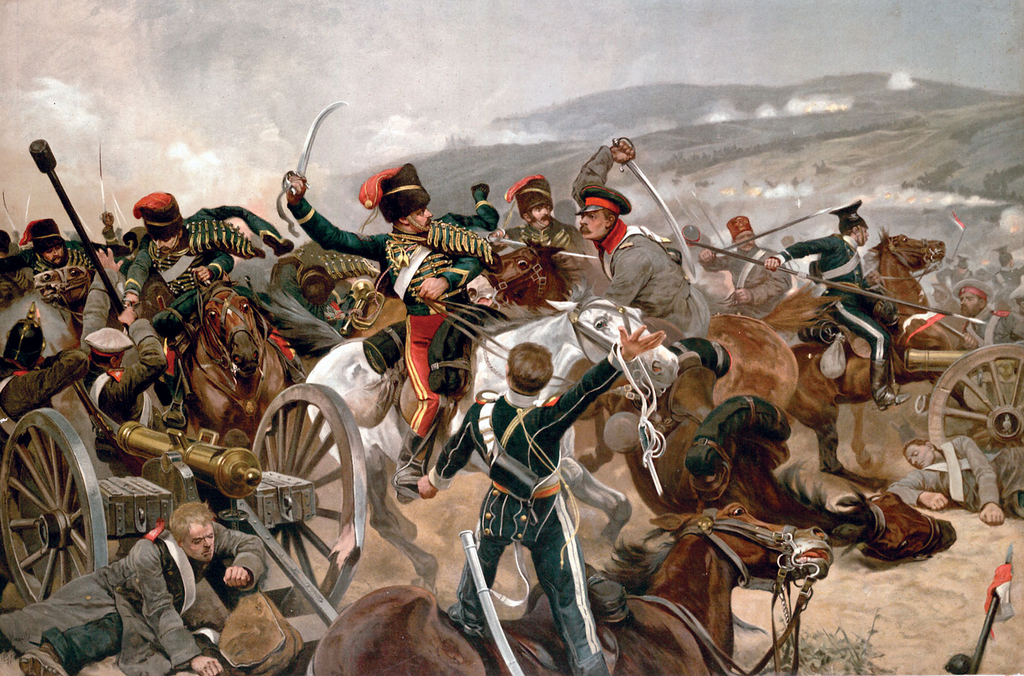
The commander of the British Cavalry Corps in World War I, Sir Edmund Allenby, was a sort of neutral party in all of this. In 1910 he had issued a new training regimen in which horsemen would train in marksmanship as well dismounted reconnaissance and other duties on foot. Even still, about 80% of British cavalry training was devoted to shock tactics. Remarkably, despite this disparity the British were the only army in Europe where the cavalry trained on foot at all, the other European high commands still clung to the outdated idea of the cavalry charge(2).

1914 saw the conclusion of this debate. On August 24th, 1914 the 9th Lancers and 4th Dragoon Guards of the British Cavalry Corps attempted a charge across an open field. The entire way German infantry and artillery shredded their ranks with accurate and deadly fire (3). Firepower had proven its effectiveness over élan and courage, the days of the massed cavalry charged had come to an end.
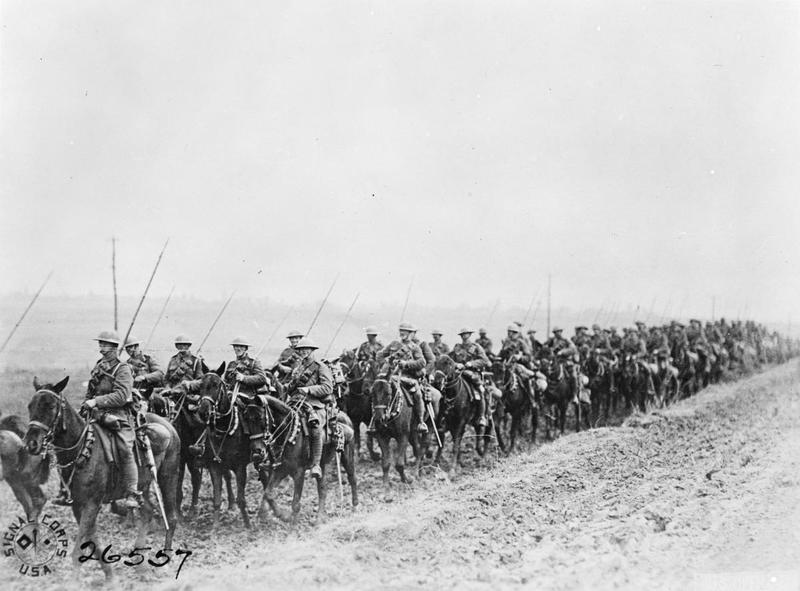
During mobilization Great Britain had requisitioned 165,000 cavalry mounts, Germany had called up 600,000 (4). To simply dismiss the cavalry due to the inability of a cavalry charge to break enemy lines would be pure folly. Instead cavalry units were kept in the armies of World War I, many fighting dismounted both in mobile warfare and in trench combat (5). Others served as valuable reconnaissance assets. In the open warfare stages of 1914 and 1918 cavalry units proved to be excellent screens for covering up the movement of the main field armies (6).
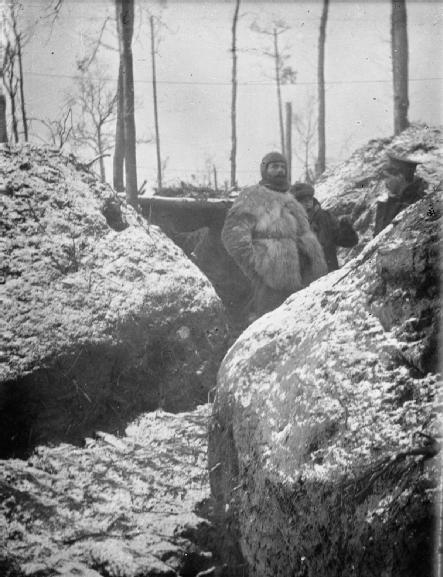
Without a doubt, World War I saw the end of millennia of cavalry being used as the hammer, striking an enemy fixed on a location by the anvil of friendly infantry. However, they proved themselves more than reliable in roles of reconnaissance where airplanes could not. For that reason, many armies kept cavalry corps within their structures, albeit in a much reduced quantity through World War II.
- Gardner, Nikolas, “Command and Control in the “Great Retreat” of 1914: The Disintegration of the British Cavalry Division,” The Journal of Military History 63, 1 (January 1999): 29-54. pgs. 33-34.
- Ibid, pg. 34.
- Ibid, pg. 44.
- Keegan, John, The First World War, 1998, pg. 73.
- Marshall, S.L.A., World War I, 1964, pg. 135.
- Balck, William, Development of Tactics- World War, 1922, pg. 228.