
————————————————————————————————- NAVIGATION
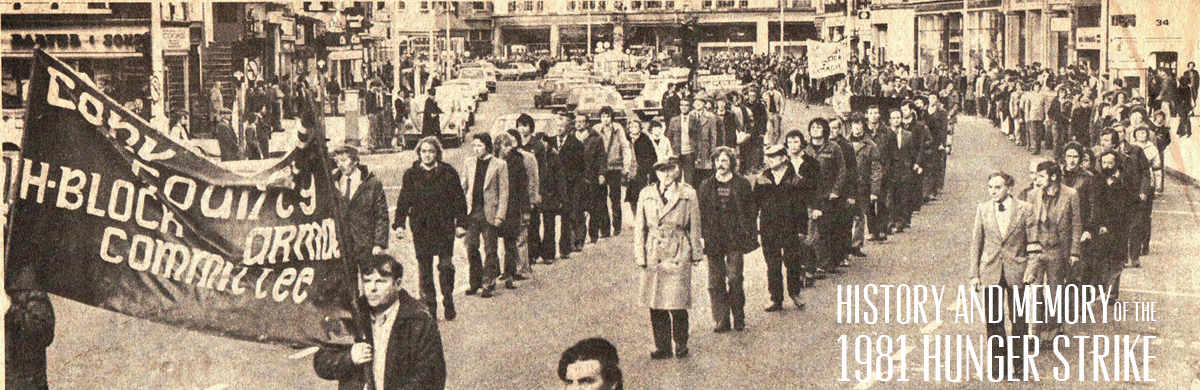
The 1981 hunger strike is one of the focal points of the forty-year conflict in Northern Ireland known as the Troubles. Soon after conflict between republican and loyalist paramilitary forces broke out in the North, the United Kingdom escalated its tactics of militant policing, arresting hundreds of suspected members of the Provisional Irish Republican Army and holding them without sentencing, known as internment. Many of those imprisoned young men were held at Long Kesh prison in Co. Down. Throughout the 1970s, Long Kesh became a sort of cultural breeding ground, where men spoke the Irish language to each other (albeit a strange dialect specific to the prison), created art, and shared ideas with each other.
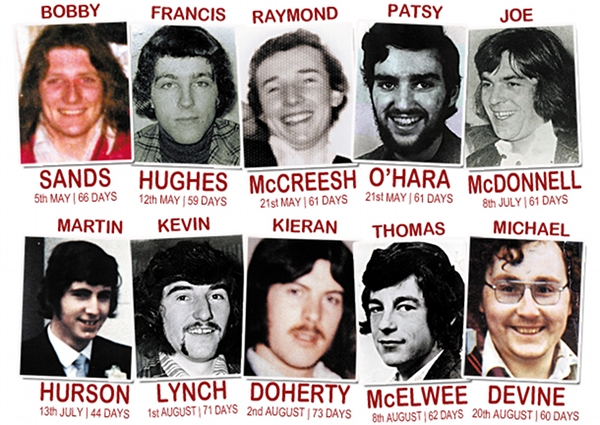
However, in the middle of that decade, the British government became even more stringent in its policing of republican prisoners, and revoked their Special Category Status, essentially transforming them from quasi-prisoners of war to common criminals, not protected under the Geneva Conventions and lacking any rights. The use of torture became prominent in Long Kesh, especially in the H-blocks, comprised of solitary confinement cells formed in an H shape. The prisoners engaged in a number of protests to self-advocate to regain political prisoner status, including the dirty protest, blanket protest, and, ultimately, two hunger strikes. The second of these hunger strikes, which lasted from March to October of 1981, resulted in the death of ten IRA and INLA prisoners. It also quickly garnered international support and recognition for the IRA’s cause and the plight of the republicans held in British prisons, especially following the election to Parliament and subsequent death of the first hunger striker, Bobby Sands.
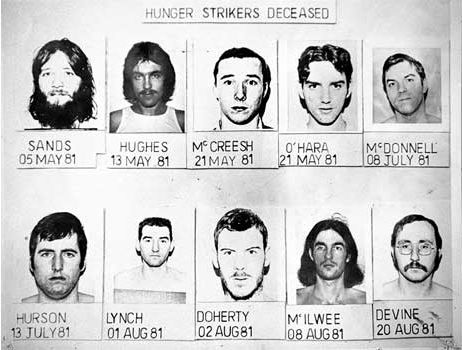 Bobby Sands and his fellow hunger strikers still maintain a precarious space in Irish national consciousness now, 35 years after their deaths. It is clear from even a cursory perusal of the strikers’ writings and global message in 1981 that they fully expected to die, and perhaps even reveled in this inevitability. Both as Catholics and as staunch nationalists, they recognized the value of self-sacrifice and martyrdom, both to transform the mundane self into a sublime being, and to gain popular support and sympathy for a cause that may otherwise be interpreted as radical or misguided. By dying of starvation, simultaneously at their own hands and at the hands of the British government, they asserted an agency that had been lost to them within the walls of the prison cell. Like so many Irish martyrs before them, notably including the leaders of the 1916 Easter Rising, the ten men who died on hunger strike in 1981 recognized that their lives could have more meaning once they had died noble, sublime, saintly deaths.