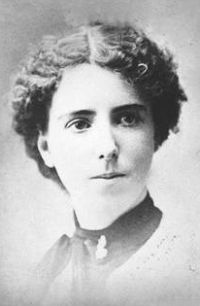
 Kathleen Clarke was born Kathleen Daly in Limerick Ireland in 1878. She was a young national activist who partook greatly in the 1916 Rising through her work in politics. As the wife of Thomas Clarke, she had access to backdoor knowledge of the Rising and would continue to be a prominent political figure in Irish politics until her resignation from the Fianna Fial in 1941, twenty-five years later.
Kathleen’s revolutionary family included John Daly, her nationalist uncle, who was fond of Thomas Clarke and his perseverance through fifteen years in jail. He took Thomas Clarke into their home where he was introduced to Kathleen when she was half his age at 20 years old. When she struggled to find work in Ireland, she moved to America with Thomas in 1900 where they then got married in 1901. Over the course of the next six years, she would bear three sons only to return to Ireland in 1907 to continue the fight for independence.

As the wife of one of the leaders of the Rising, Kathleen knew much more about the plans and inner workings of the Rising than the average woman. This intelligence made her the ideal “ghost” to Thomas Clarke, so that plans for the uprising would continue if he were to be compromised in some way.
Kathleen Clarke’s duty to act as a “ghost” to Thomas Clarke was a vital part of her memory. The name itself suggests a background presence in what is perceived as “the real history” of the Rising, that of its male leaders. The very term “ghost” implies a secondary presence and threatens to illegitimate Clarke’s plethora of political accomplishments. This exposes the efforts of famous Republican women to use their social capital and marital statuses to carve out their own space in the Rising— a limited space, but one that their social class would unlock.
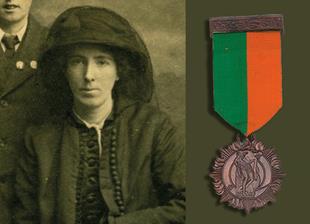 After his execution, she took over the funds of the Irish Republican Brotherhood in order to financially support the dependents of those who were executed, killed in action or jailed during the Rising. In 1921, the Irish White Cross was set up to take over with funds from North America. In May 1918, she too was arrested with Markievicz, Sheehy-Skeffington, and Gonne but which quickly released in February of 1919.
Clarke was one of four women to be elected into the Sinn Fein executive in 1917. In late 1919 after her imprisonment, Clarke became a successful Sinn Fein candidate in the local government and then was elected in 1921 to be a Sinn Fein member of the second Dail.
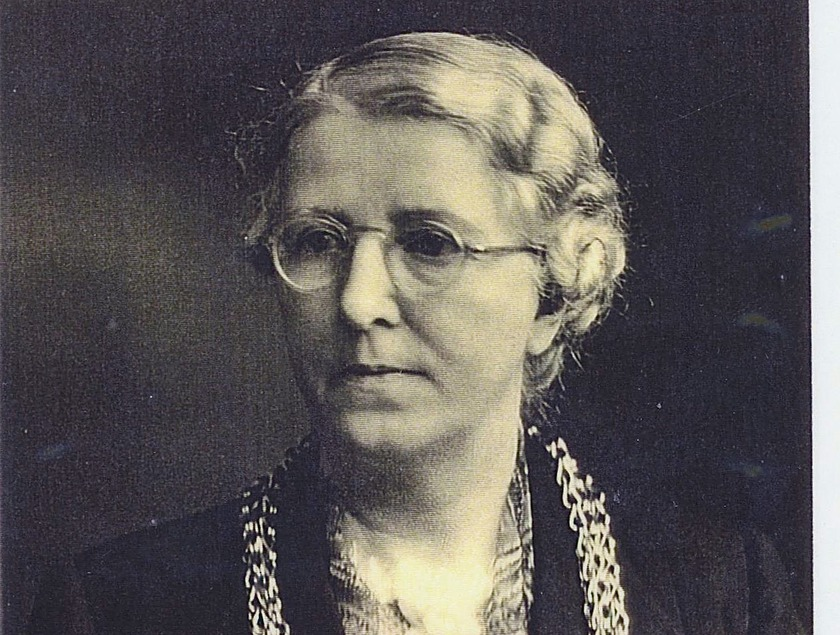 She was elected to the third Dail as a Fianna Fial candidate in 1925 and then was elected as a Senator of the Upper House where she devoted much of her work to opposing the narrow-minded, sexist endeavors of Eamon de Valera. In 1939 she chipped at the glass ceiling, becoming the first female to become the Lord Mayor of Dublin. After a long successful career, she retired from the Fianna Fial in 1941 to live out the last of her life in peace.