Background
Stone Mountain is a small town in Georgia that only more recently became a center of controversy. The mountain for which the town is named features an elaborately detailed bas-relief carving of Confederate leaders Stonewall Jackson, Jefferson Davis, and Robert E. Lee (Shavin). The state of Georgia, of course, was a member of the Confederacy during the Civil War, resulting in the desire there today to commemorate Civil War figures from the South.
Commemoration History
In the first decade of the twentieth century, Sam Venable, the KKK member who owned the mountain, leased its north face to the United Daughters of the Confederacy’s Atlanta chapter; the group subsequently hired Gutzon Borglum, the man who would go on to design Mount Rushmore, to “carve a tribute to Lee into the rock” (Shavin). Borglum, however, was not content with stopping there, and eventually someone else was hired, who eradicated Borglum’s work and began afresh, only to run out of money just before the Great Depression struck (Shavin).

The project got a second chance in the 1950s, when the governor of Georgia, Marvin Griffin, coordinated efforts by the state to purchase the mountain with the goal of completing the carving; the project finally resumed in 1963 under the direction of Walker Hancock and was completed 9 years later (Shavin).
Significance Today
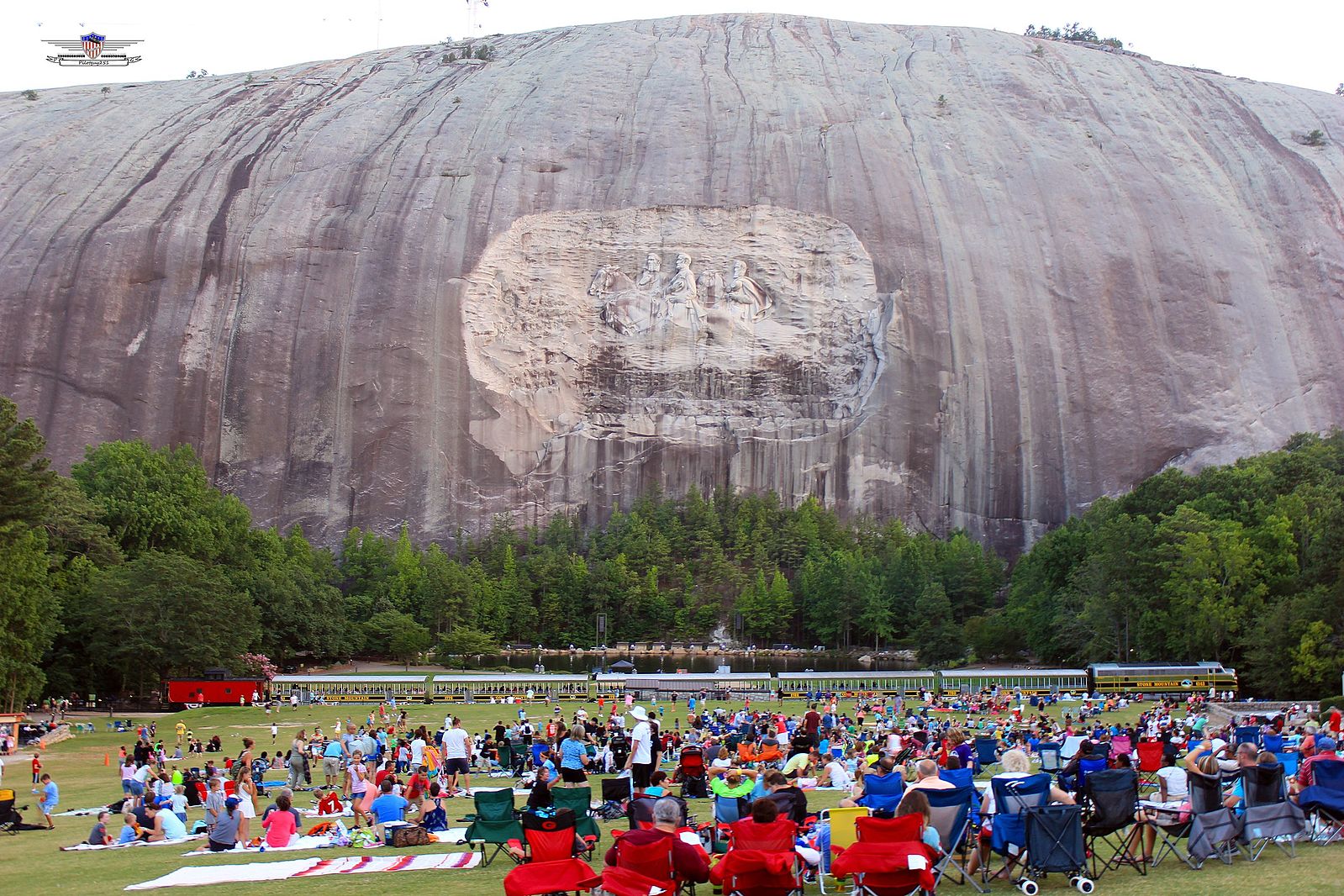
Today the carving exists as Hancock envisioned it, complete with a 45-minute laser show which is “projected directly onto the carving” (Shavin). Due to the controversial aspect of commemorating men who stood for nothing less than the cause of slavery, many people have in recent years suggested the addition of a less controversial, African-American figure, such as Martin Luther King, Jr.; others firmly believe that the carving should be preserved as is, as it is a piece of history that they feel should not be tampered with (Shavin). Interestingly, citizen enthusiasm for Civil War commemoration and observance is more prevalent in the former Confederacy; however, it usually ignores the slavery aspect (Franklin 105) and focuses instead on Southern pride. The Stone Mountain carving is no exception. Perhaps due to this controversial aspect of the site, Stone Mountain has not been incorporated into the National Parks
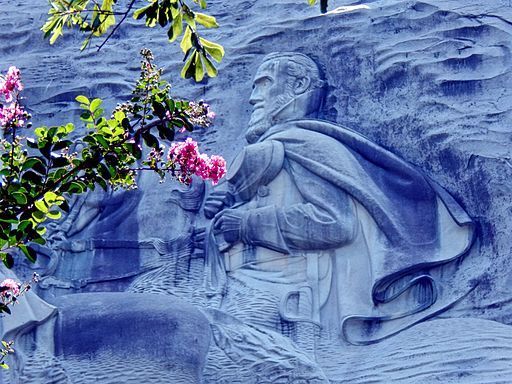
system–unlike Gettysburg, Appomattox, or Harpers Ferry. Southern Civil War sites in general can be more difficult to commemorate, as the federal government would understandably be hesitant to appear to endorse men who fought to preserve slavery as an institution. However, commemorating Union sites as national parks and not their Confederate counterparts does nothing to break down the regional divide that still exists in this country today.
“What do we do about emblems that are harder to remove than a mere flag? And should we destroy works of historic public art in response to changes in the national consciousness?”
–Naomi Shavin, “Stone Mountain and the Debate Over Confederate Symbols in Georgia”
Connection to the Easter Rising
Unlike the other sites that this website examines, Stone Mountain was not the site of a battle or insurrection. It is valued as a commemorative site only because of the commemorative carving that it contains. Unlike the Easter Rising historical sites, which all directly played a role in the Rising, this site was created decades after the end of the Civil War, with the purpose of honoring Confederate heroes in mind. It is a manufactured place of significance that would not otherwise have anything to do with the Civil War. This poses an intriguing question–can commemoration be created? In other words, can it exist outside of the places in which the events that it honors occurred, and still be genuine?