Website of the Irish Studies Group at SUNY Geneseo
Contemporary Commemorative Murals
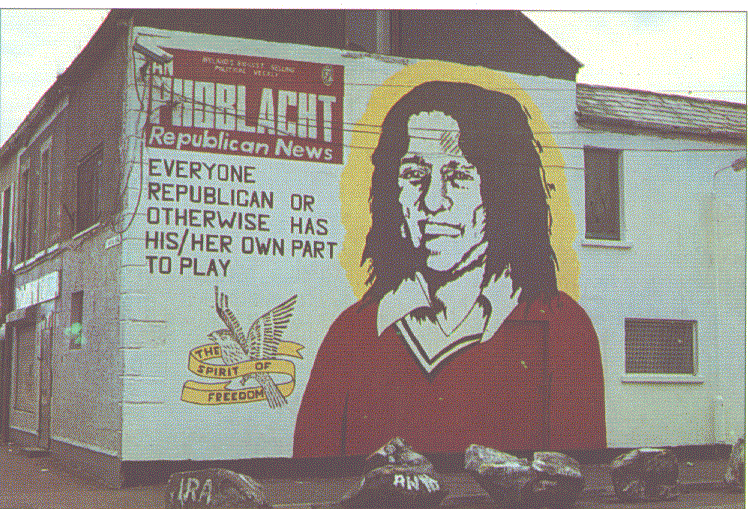
Sevastopol Street & Falls Road, Belfast, 1990. Bobby Sands. (Bill Rolston)
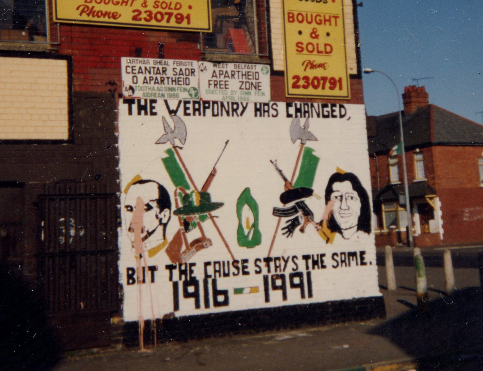
James Connolly and Bobby Sands alongside a rifle and Armalite, respectively; “The weaponry has changed, but the cause stays the same. 1916 – 1991.” (Eric Arnum)
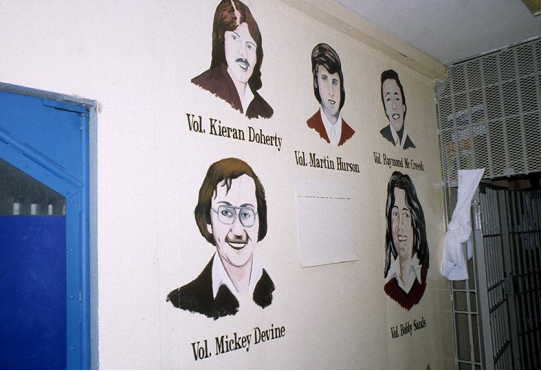
H-Blocks, Long Kesh prison, late 1990s. IRA mural of the 1981 hunger strikers. (Bill Rolston)
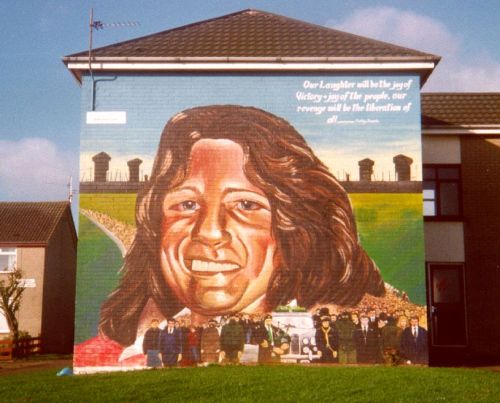
Garden Row, Twinbrook, Belfast, 1999. Bobby Sands with Long Kesh watchtowers behind him; “Our laughter will be the joy of victory and joy of the people, our revenge will be the liberation of all – Bobby Sands.” (Jonathan McCormick)
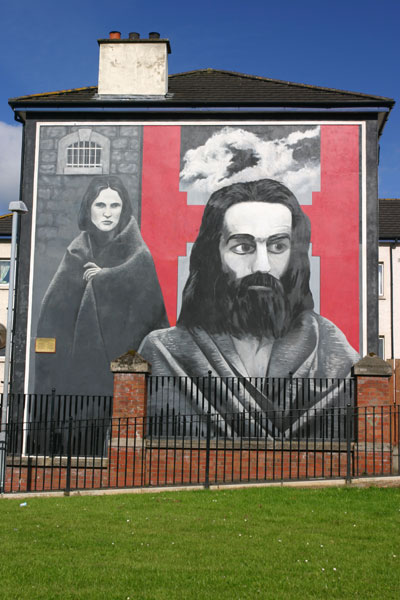
Rossville Street, Derry, 2000. Raymond McCartney, leader of the 1980 hunger strike. (Bogside Artists)
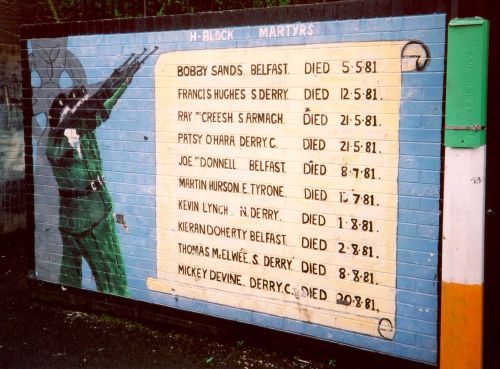
Bishop Street Without, Derry, 2000. Armed republicans with rifles raised in salute, celtic cross and the names, areas and dates of death of the ten hunger strikers; “H-Block Martyrs” (Jonathan McCormick)
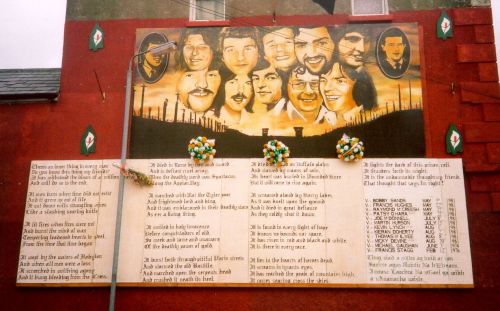
Beechmount Drive, Falls, Belfast, 2000. Portrait of the ten hunger strikers above a poem by Bobby Sands and a list of their names and death dates. (Jonathan McCormick)
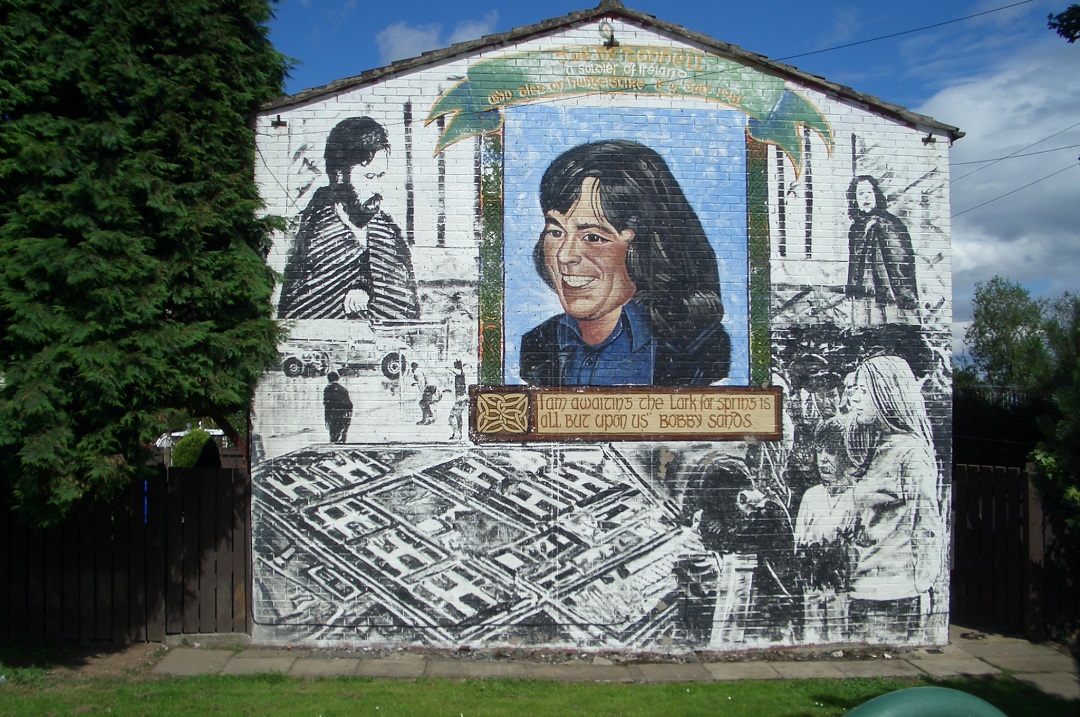
Suffolk Road, Belfast, 2000. Portrait of smiling Joe McDonnell surrounded by images of the H-blocks and blanketmen; “I am awaiting the lark for spring is all but upon us”- Bobby Sands” (PPCC Antifa)
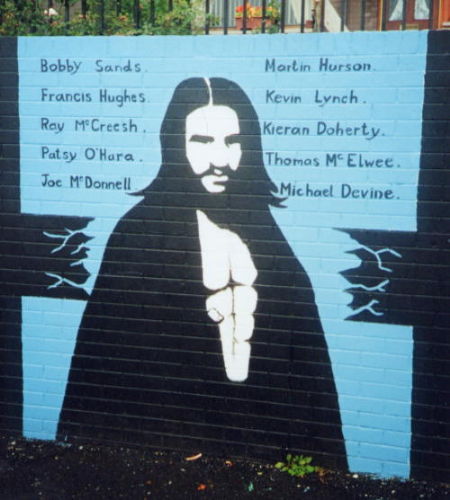
Bishop Street Without, Brandywell, Derry, 2001. Portrait of blanketman surrounded by the names of the ten hunger strikers. (Jonathan McCormick)
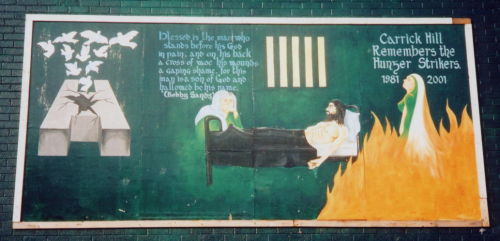
Dying hunger striker lies in bed holding rosary beads as Eire emerges from the flames wearing the tricolor; “Blessed is the man who stands before his God in pain, and on his back, a cross of woe, his wounds a gaping shame, for this man is a Son of God and hallowed be thy name (Bobby Sands)”; “Carrick Hill remembers the hunger strikers 1981 – 2001.” (Jonathan McCormick)
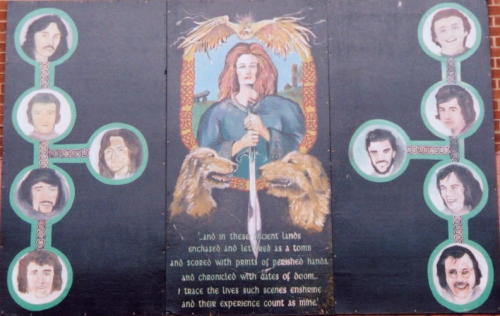
Culdee Street, Windmill, Co. Armagh, 2003. Ten hunger strikers surrounding image of Eire holding a sword and a poem by Thomas Hardy. (Jonathan McCormick)
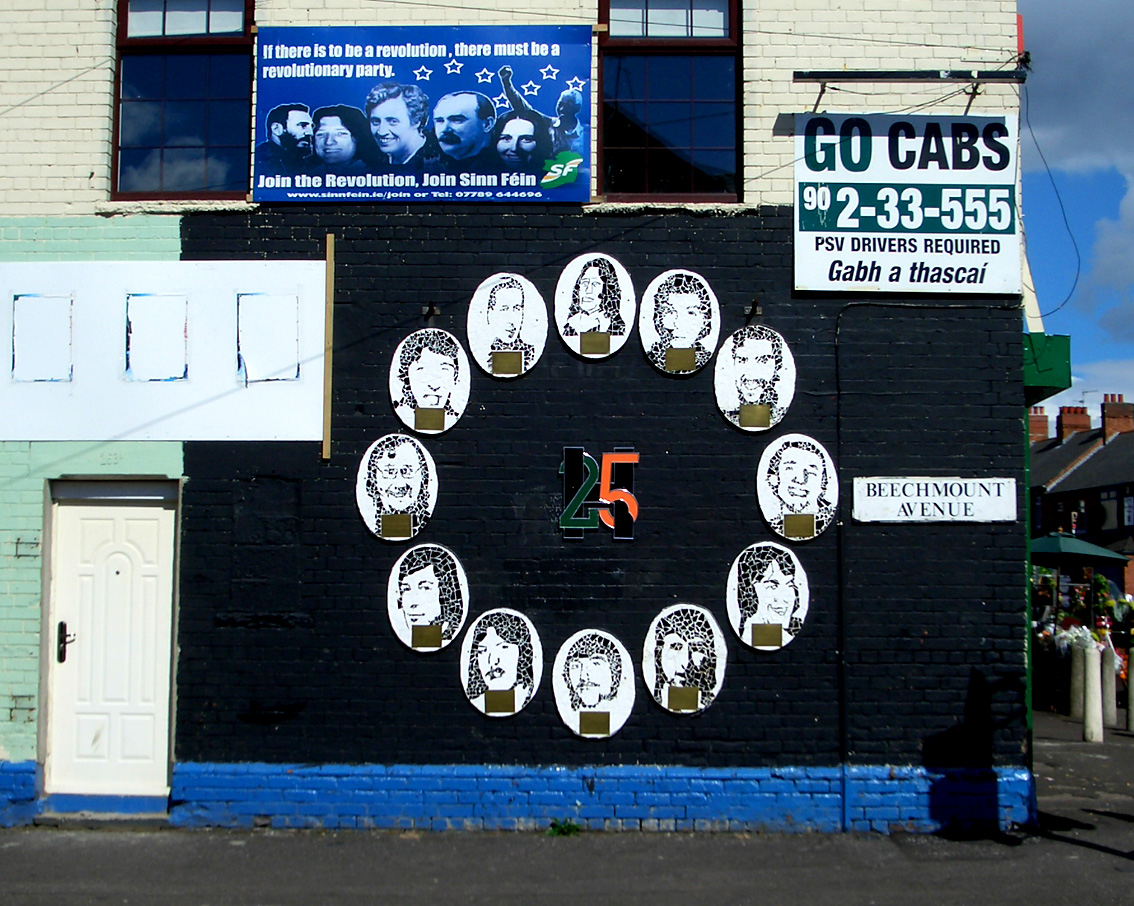
Beechmont Street, Belfast, 2006. H25 logo surrounded by images of the ten hunger strikers who died. (PPCC Antifa)
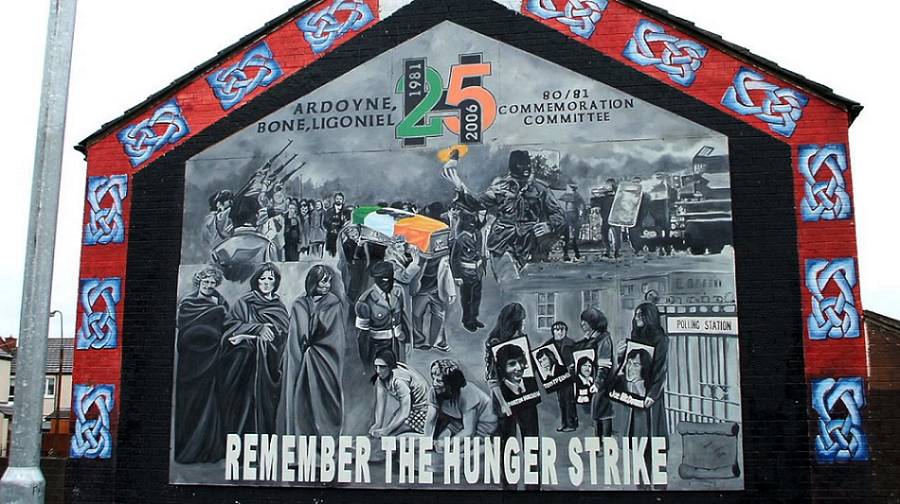
Derry, 2006. Clockwise from left: An IRA funeral, IRA fighters and riot police, women holding images of some of the hunger strikers at the polls, women banging lids on the ground (a protest staged during 1981), three blanketmen, H25 logo on top. (Bill Rolston)
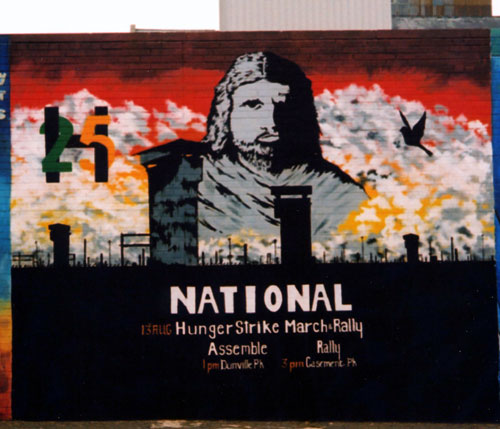
Divis Street, Falls, Belfast, 2006. Bearded blanketman over the silhouettes of the watchtowers of Long Kesh next to H25 logo; “National Hunger Strike March & Rally.” (Jonathan McCormick)
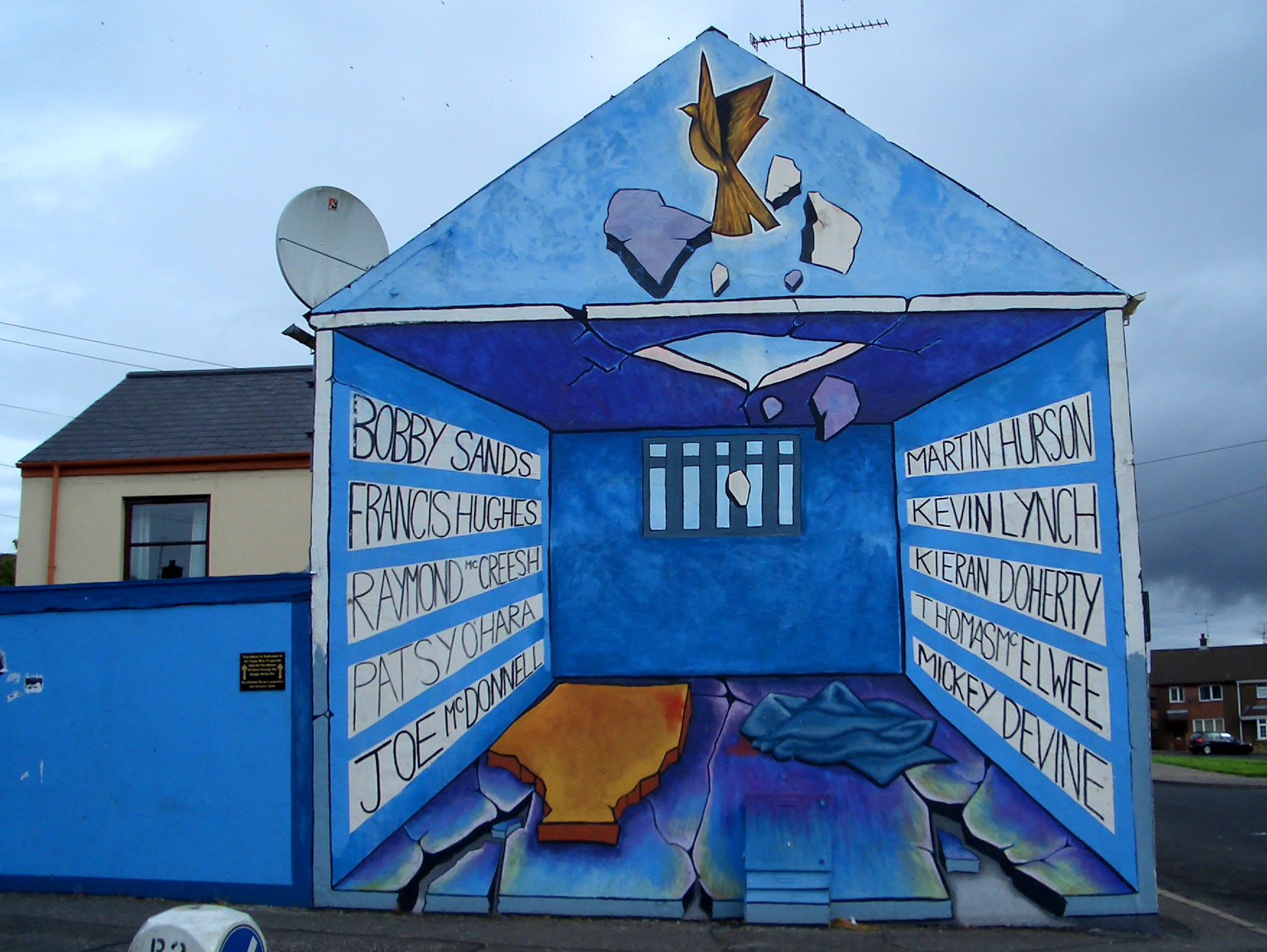
Empty prison cell with a crumpled blanket on the floor surrounded by the names of the ten hunger strikers. (PPCC Antifa)
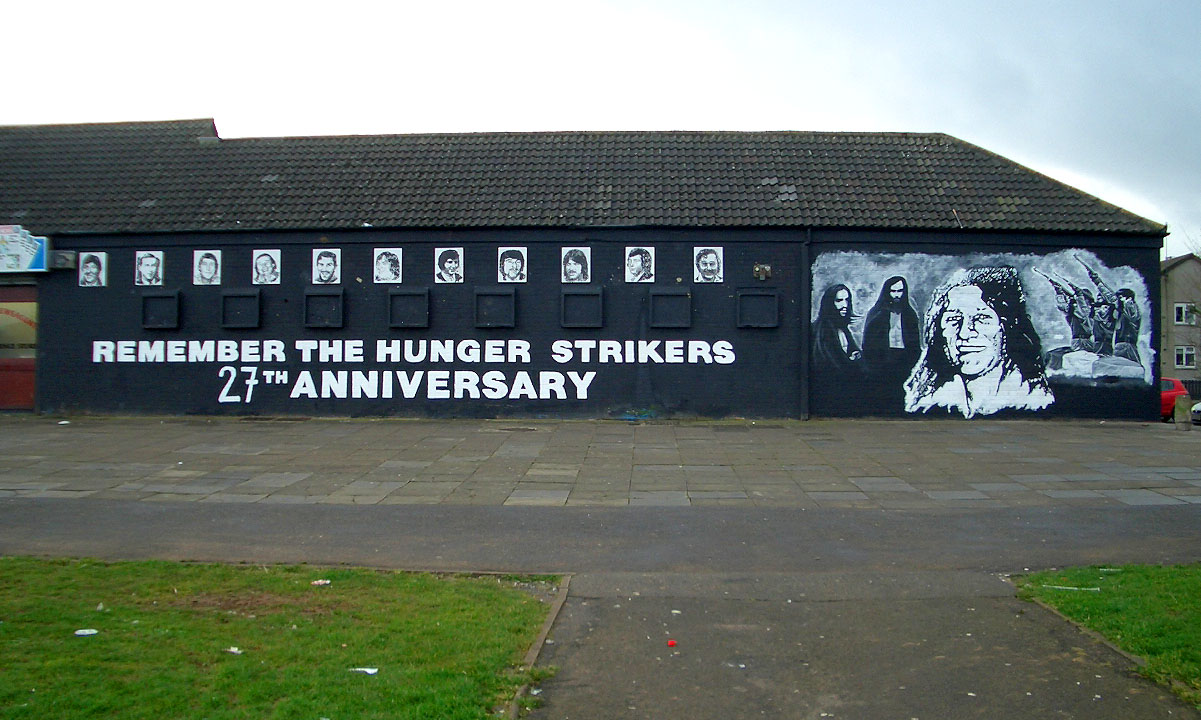
Belfast, 2008. Left: Images of the ten hunger strikers; Right: Two blanketmen, smiling Bobby Sands, IRA rifle salute; “Remember the Hunger Strikers 27th Anniversary.” (PPCC Antifa)
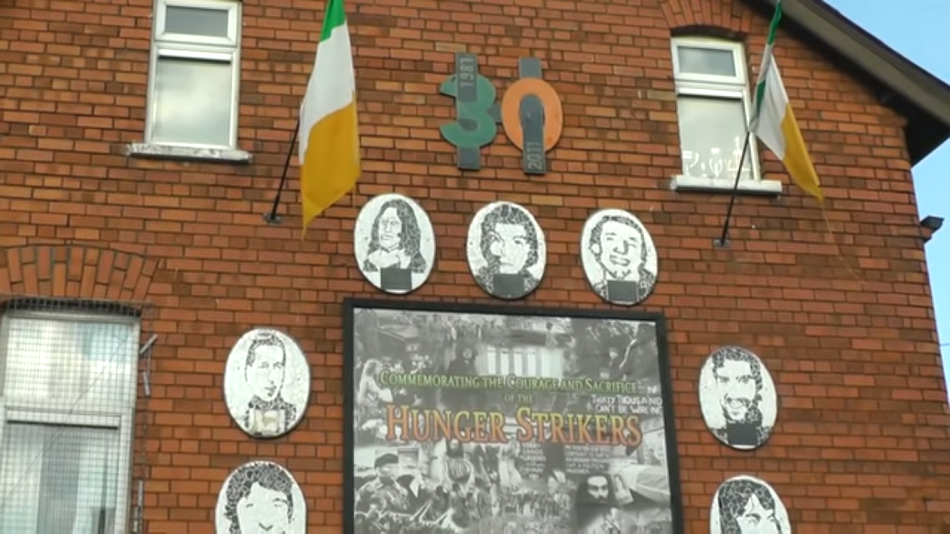
Poster reading “Commemorating the courage and sacrifice of the hunger strikers” surrounded by images of the 10 who died, H30 logo on top. (Huw Spencer)
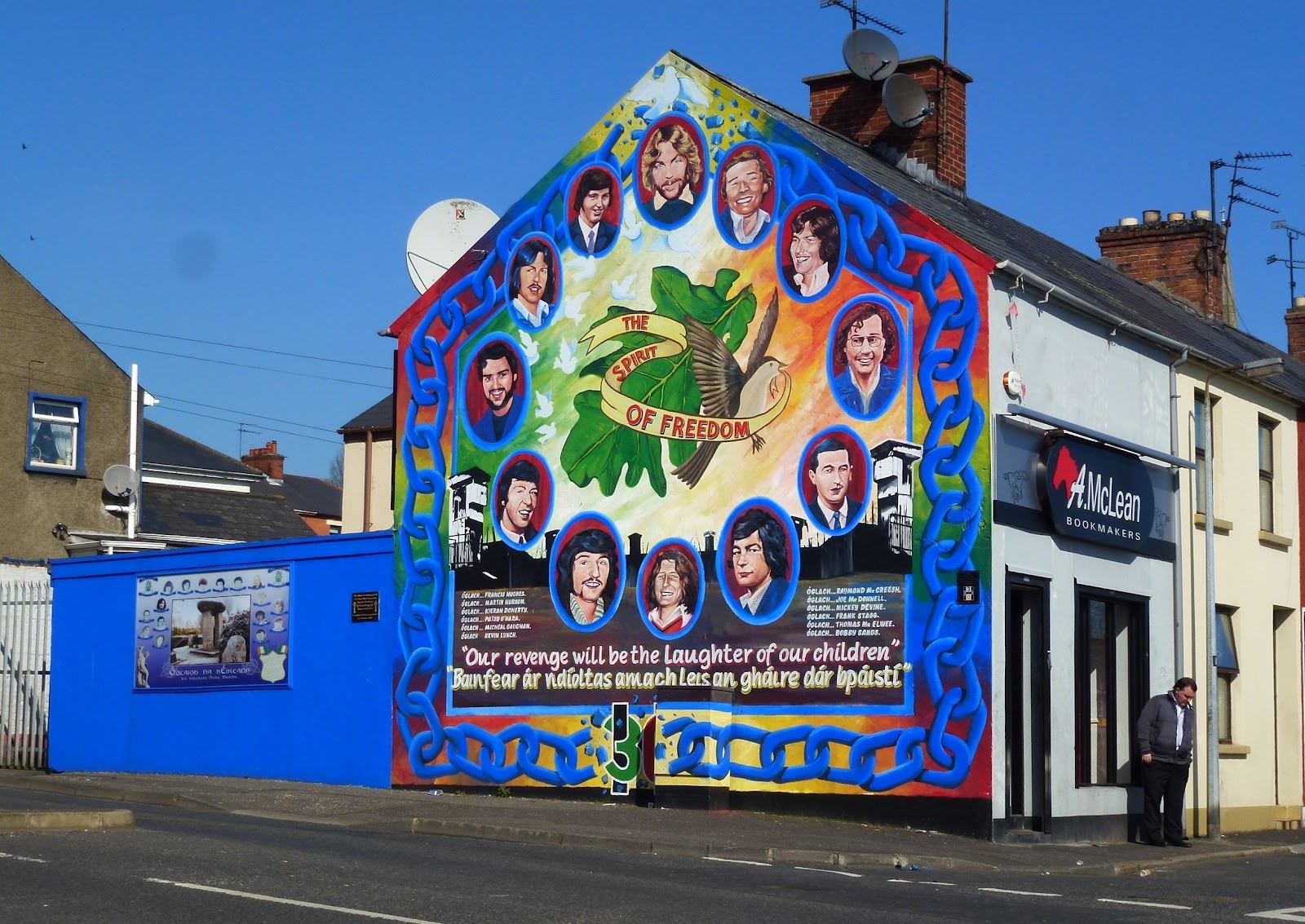
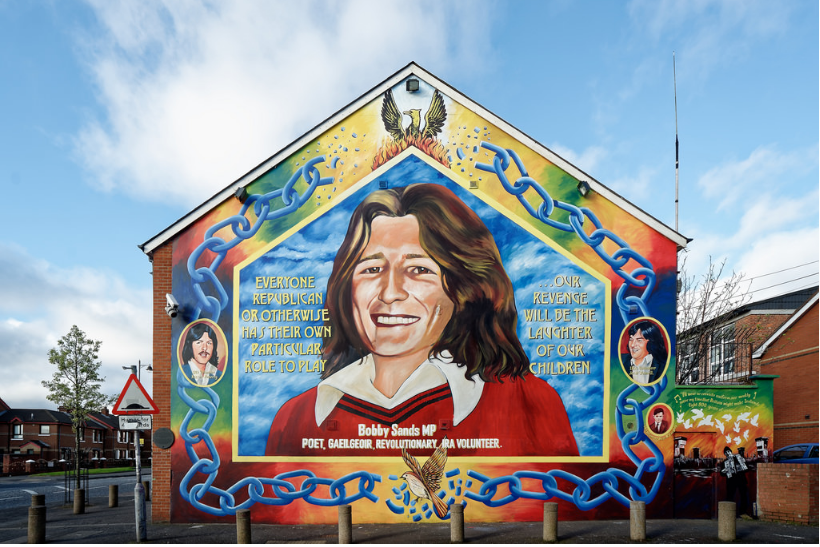
Derry, 2011. “The Spirit of Freedom” surrounded by the smiling faces of the ten hunger strikers; “Our revenge will be the laughter of our children.”
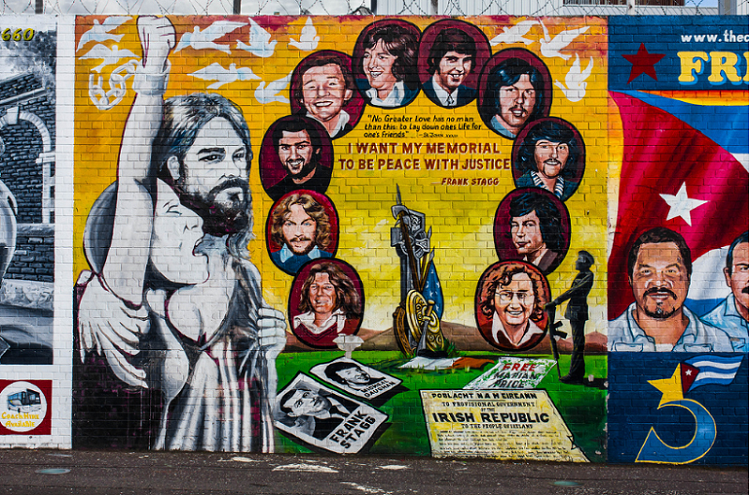
Belfast. “I want my memorial to be peace with justice – Frank Stagg” surrounded by portraits of the ten hunger strikers, with blanketman and woman to the left.
Belfast. Smiling and healthy Bobby Sands surrounded by some of his famous quotations.
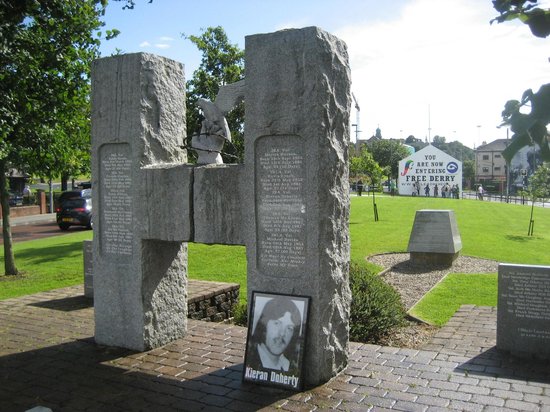
Derry. H-block memorial at Free Derry Corner. Inscription on the monument lists the names, birth and death dates, ages, and number of days on strike for each of the ten strikers who died; “Let our revenge be the laughter of our children” (Bobby Sands); “I’ll wear no convict’s uniform, nor meekly serve my time” (“The H-Block Song”)
Looking at these murals, which represent different anniversaries of the 1981 hunger strike by intervals of about five years, it becomes clear that the space this strike occupies in Irish republican collective memory has undergone a radical transformation from the overtly Catholic and overtly militant murals from the era of the strike itself.
The murals from the early 1990s, before the Good Friday Agreement, which initiated the peace process that ended the Troubles, and, to some extent, those from directly after the Agreement and into the early 2000s, still maintain many of the same motifs that are found in the murals from 1981. These murals still feature images of weaponry and IRA fighters, both in traditional military uniforms and in ski masks. Moreover, many still maintain the motif of depicting the blanketmen, emaciated with their long hair and beards, as strikingly Jesus-like figures, drawing on the language of martyrdom and Catholicism that was prominent for so many years of the Irish republican struggle.
However, even in these earlier commemorative murals, these motifs start to become more secular and more palatable. Bobby Sands is no longer a skeletal figure with his arms and legs outstretched, as if nailed to a cross; rather, he is a glowing, healthy, smiling portrait on the wall. Images of Eire, representing Ireland as a woman, begin to replace similar images of the Virgin Mary. By 2006, the 25th anniversary of the strike, we do not even see the blanketmen in their prison cells, instead viewing only invokations of these once-prominent images of starving, unwashed, tortured prisoners. Into this decade, the hunger strike has clearly been recast as a story of collective history rather than a legacy that it is the duty of the young men who live in these neighborhoods to perpetuate. We are commemorating the martyrs of yore, but we no longer want our young men to become the martyrs of the future. Now, years after the Good Friday Agreement, these murals work on two levels, still functioning as works of Irish republican political propaganda, but also taking on a new role as pieces of art, tourist attractions, and overall non-alienating attributes of a neighborhood.