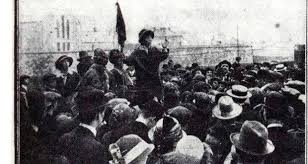
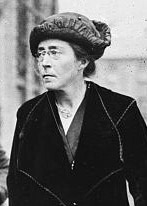
 Hanna Sheehy-Skeffington was a well-educated Irish suffragist born in County Cork in 1887. She received her M.A degree from the University of Dublin and went on to teach German. She was also the co-founder of the Irish Women’s Franchise League which was committed to the incorporation of women’s suffrage into the Home Rule Bill. As this did not succeed, her work continued long after with nationalist articles in their paper, The Irish Citizen.
Sheehy-Skeffington shared the same pacifist ideas as her husband, Francis Skeffington, and did her part for the Rising by serving as a messenger and delivery person because she refused to be left behind to cook. Her husband was shot in cold blood during the Uprising and she was later arrested in 1918 and sent to Holloway Jail along with Countess Constance de Markievicz, Maud Gonne MacBride and Kathleen Clarke for declaring the England, not Germany, was the true enemy of Ireland. She began a hunger strike and was the first to be released just three days later in fear by the English of creating another martyr.
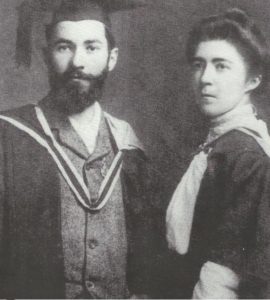 Sheehy-Skeffington felt that Irish women were worthless in their own land than English women in England or French women in France. Similarly, she was angered that education was left mostly for the boys while girls were shipped off to be married. She did her best to break that mold at Dublin University, encouraging others through example to follow in her footsteps. Her marriage to Francis Skeffington in 1903 in no way stopped her feminist work, but rather supported it through their agreement to hyphenate her name to show equality.
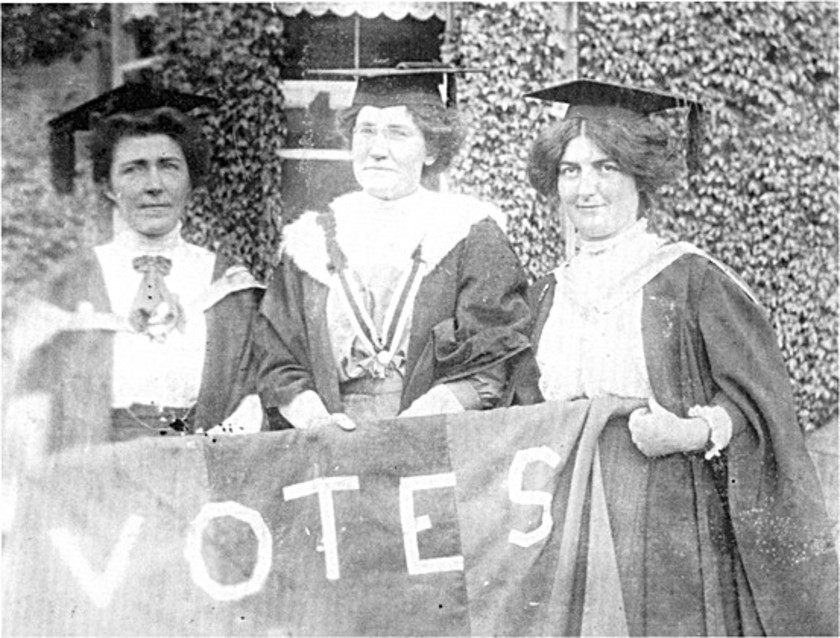 Sheehy-Skeffington was tasked with getting an interview with U.S President Woodrow Wilson in 1917. Margaret Ward wrote that “her persistence and courage wore down the efforts of English diplomacy to prevent her reaching the President”, and she was able to present to him the Republican Proclamation of Easter 1916 just three days after his famous Fourteen Point Speech. This petition signed was by Markievicz, President of the Cumann na mBan, Mrs. Pearse and other distinguished Irish women to ask for the inclusion of Ireland among the small nations for whose freedom America was fighting.
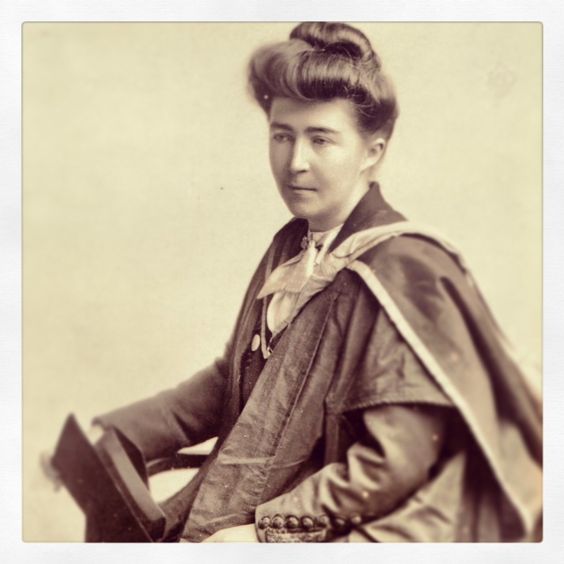 In 1918, Sheehy-Skeffington became a member of Sinn Fein and was elected as the chair of the Irish Women’s Franchise League. Later in 1920, she was elected as Councilor of Dublin.
As an extremely well-educated woman, with the added social capital of being the wife to an eminent pacifist Rising leader, the influence of her husband undoubtedly gave her the public voice needed to become such a prominent figure in the Rising. Adding to the trope to other well-documented Republican women, being well-off and having an influential relationship makes us wonder how much of that is taken into account when writing history.
This is not an effort to downplay the activism, writing, and political leadership of this very capable woman, but rather to wonder how that influence would have differed had Sheehy-Skeffington been a working class woman or had lacked relations to an influential male Rising figure.