







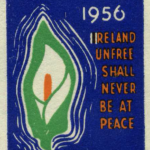
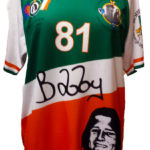
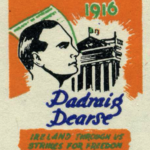



Public perception of a political organization can influence the power the group has regarding aspects of contested symbolism. The adoption of contested symbolism during times of conflict is meant to signify an organization’s validity regarding their power in the public sphere. Therefore, the more valid the argument in favor of symbolic adoption pertaining to a specific version of historical memory, the more likely it is that the skewed version will be more prevalent within the group’s sphere of influence.
The ways in which symbols operate within a certain social context also influences the impact of the interpretation of image. There are varying degrees in which symbols can operate, including but not limited to the testament of valuation placed on the image, the propriety associated, the level of innovation regarding the evolution of the meaning over time, the survival of the symbol into modernity, and the symbolic capital that is to be gained by utilizing such a symbol[1]. The valuation of symbols relates to the ranking of worth bestowed upon the image based on the prestige, the legitimacy, or the sacredness associated with the image[2]. According to the Journal of the royal Anthropological Institute, “aesthetics became a code through which opposed political interests sought implicitly to express themselves and challenge each other”[3]. There are various ways in which a group can influence the longevity and the legitimacy of their symbol, through the use of both positive and negative tactics. The Journal also states “…negative tactics include the burning of flags, the desecration of tombs, or other sorts of verbal or physical attacks on the prestige, sanctity, or legitimacy of the symbols of a rival group”[4]. The 20th century was a time in which the standard elements of symbolic nationhood first begin to appear including “…flags, anthems, and uniforms”[5], especially in the wake of World War I.
[1] Simon Harrison, “Four Types of Symbolic Conflict,” The Journal of the Royal Anthropological Institute 1, no. 2 (1995): 255.
[2] Ibid., 256.
[3] Ibid., 257.
[4] Ibid., 257-258.
[5] Ibid., 260.