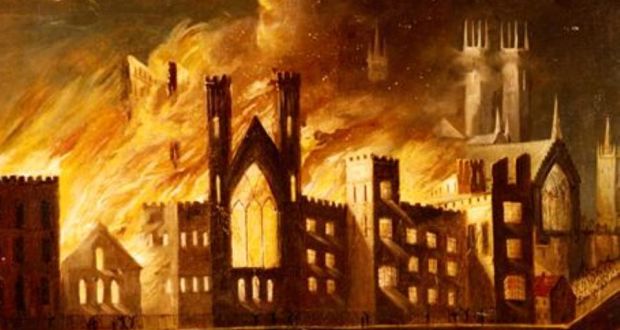
Danielstown

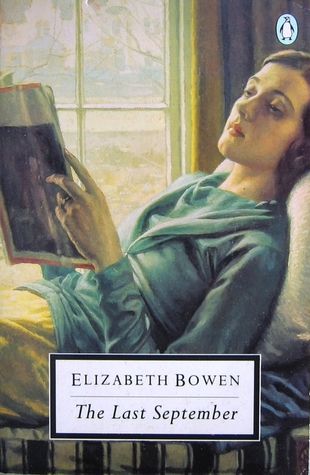
Danielstown is the fictional Big House in Elizabeth Bowen’s The Last September where Sir Richard Naylor, Myra Naylor, and their niece Lois Farquar reside. Throughout the duration of the novel they receive various visitors. The older generations in this book do not appear to want to do anything about their current situation, choosing instead to continue pursuing the frivolous–hosting tennis parties, throwing lavish dinners, and never talking about the problem in a way that would lend itself to solutions. The younger generation however are not content with their current situation and constantly try to get to the heart of the problem. Lois’s cousin Laurence, brings up the inevitability of the burning of the Naylor household, and even says he would like to be there when it burns down. Lois does not feel anything in particular for this house as it only served as an empty attempt at being ‘home’. 

In the novel, Bowen notes, “Sir Richard and Lady Naylor, their nephew, niece and old friends had a thin, over-bright look, seemed in the air of the room unconvincingly painted, startled, transitory” (Bowen 28). The whole gathering of guests and dining at these parties isn’t enough, for anyone really, and they all don’t feel permanent in this house–this lifestyle. The Ascendency is merely a facade trying to cover the liminality so many Anglo-Irish felt. This helped contribute to how easily the Ascendency crumbled with the threat of fire, even after so many years of being around.

This novel shows the inevitable decline of the Big House lifestyle, after Danielstown, and many other are burned down. The burning of these Big Houses symbolized an end to the Ascendency lifestyle that had been around since the 17th century. Landlords of these homes were isolated from the rest of the countrymen and owned large portions of the land. This did not sit well with the people who were not in the Anglo-Irish social class. They felt as though these Big Houses served as symbols of their oppression and poverty so began destroying them in earnest. Others still, burned these houses down with military precision, allowing them to be casualties of the war going on around them. Fire was a means of an end, the end of the houses, and the end of the rule of the oppressive English on the land.

Although Danielstown is fictional, the events that occurred in the novel weren’t that far from reality. Danielstown was an actualization of the fears so many people had about the decline of their lifestyle, and further served as a symbol of the ultimate downfall of the Big Houses.


[Home Page] [Connections] [Mitchelstown[Bowns Court] [Burning and Destruction]

Belfast Agreement (The Good Friday Agreement)

Return to Main Page

On April 10, 1998, the Belfast Agreement, also known as the Good Friday Agreement, was signed.

This three-way agreement between the Government of the United Kingdom of Great Britain, Northern Ireland, and the Government of Ireland promoted cross-border relations between the North and South. In the Declaration of Support, it states “it is accepted that all of the institutional and constitutional arrangements – an Assembly in Northern Ireland, a North/South Ministerial Council, implementation bodies, a British-Irish Council and a British-Irish Intergovernmental Conference and any amendments to British Acts of Parliament and the Constitution of Ireland – are interlocking and interdependent and that in particular the functioning of the Assembly and the North/South Council are so closely inter-related that the success of each depends on that of the other” (1).

This idea that both sides had to work together in order for this agreement to really have an impact was monumental. By splitting the power up and also making it so that the North and South were interdependent it allowed the two countries to resolve disagreements in a peaceful and non-violent manner. In a civil way, it gave a voice to both sides. One way that the Agreement encouraged the power sharing between the two groups was to find common ground where they can work together to better the land as a whole.  This included areas such as agriculture, transportation, education, waterways, and things of that nature. Overall, there were twelve areas total where the North and South had to work together. This helps with the flow of cross-border connections. Instead of focusing on the differences between Irish Catholics and English Protestants, they can focus on the common interests that can better the nation and hopefully help the people feel more connected to one another. It builds a sense of community and attempts to break the imagined border between the Irish Catholics and English Protestants.

The agreement also allowed the people of Northern Ireland to remain with Great Britain if the majority of the population agreed to it on their own terms.  This statement was a compromise between the Irish Catholics and English Protestants wishes; it did not set anything in stone and respected the wishes of both sides. This was to encouraged Irish Catholics to use more peaceful means to achieve their dreams of a united Ireland. “It is the firm will of the Irish nation, in harmony and friendship, to unite all the people who share the territory of the island of Ireland, in all the diversity of their identities and traditions, recognising that a united Ireland shall be brought about only by peaceful means with the consent of a majority of the people, democratically expressed, in both jurisdictions in the island” (1).

What Were the Initial  Reactions to the Belfast Agreement? 

The reactions to the Agreement were mixed at first. Both sides were critical and complained that the Agreement gave too much to the other side. For the English Protestants, they worried that if the population of Northern Ireland were somehow persuaded into joining the Republic, they would lose their connection with Britain. They also feared about becoming the minority in a vastly Irish Catholic nation. The Irish Catholics felt that they would never achieve a united Ireland if they had to somehow convince the mostly English Protestant nation to join the Republic through peaceful means alone.

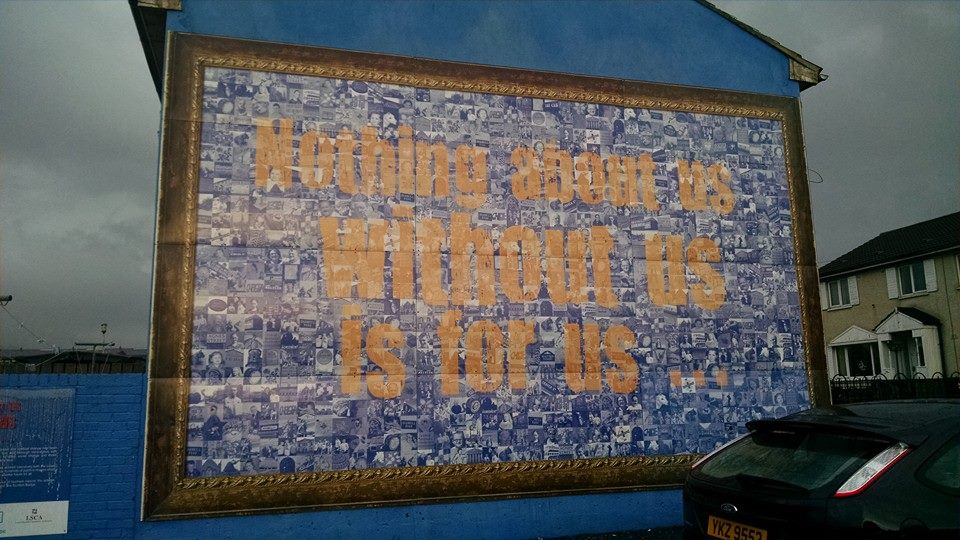
A loyalist Mural Expressing Disdain Against the Agreement , 2014.

Thanks to the Agreement, however, citizens are free to reside where they choose, so segregation with Northern Ireland was working towards more integration between communities and embracing the diversity. While the Agreement appeared to be successful with addressing the issue of the border, it needed more time and the efforts of the citizens in order for the boundaries to be settled.

It’s hard to ask citizens to leave the past behind them and settle their differences when it is so deeply embedded in their historical memory. Events like, Bloody Sunday,  established borders through violence and led to mistrust between Irish Catholics and English Protestants.  This mistrust and hatred between the two groups led to boundaries between them where certain areas, such as Shankill Road, within Northern Ireland were clearly defined as Catholic or Protestant with the use of graffiti, murals, and movements like Orange Parades.  It was evident that Irish Catholics and English Protestants still had trouble trusting one another. On top of that, there was also some controversy with the releasing of prisoners who were involved in the violence during The Troubles and during the arrangement of The Agreement the IRA was refusing to give up their weapons. Because of these reasons and past events, both Catholics and Protestants were extremely doubtful of The Agreement’s success.

https://www.flickr.com/photos/bc-burnslibrary/6217921305/in/photolist-XxXRAc-bDJNKQ-niiV2Y-6eynd5-atstnK-6ypGdr-7oJuAB-ngLoZ9-7oNktC-7hQ3cs-4K4PL7-dVD5Z2-TFbCZm-B8rvXJ-FjPUJM-oeBeSe-CjRSnR-qGHJMz
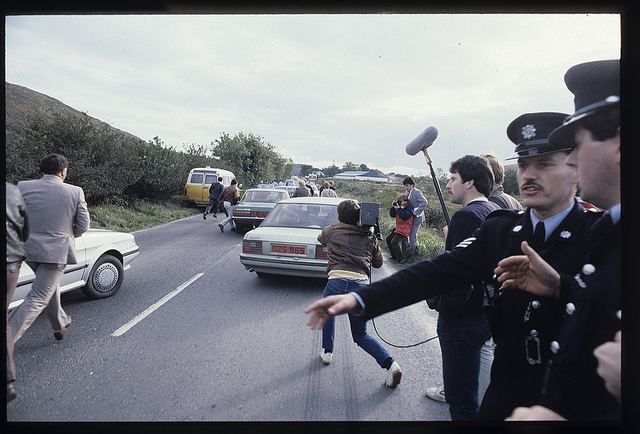
Handing over of Dominic McGlinchey, INLA (Irish National Liberation Army) leader, by RUC (Royal Ulster Constabulary, Police Force in Northern Ireland) at Killeen, border near Newry, 1980s. Taken by Bobbie Hanvey, photographer.
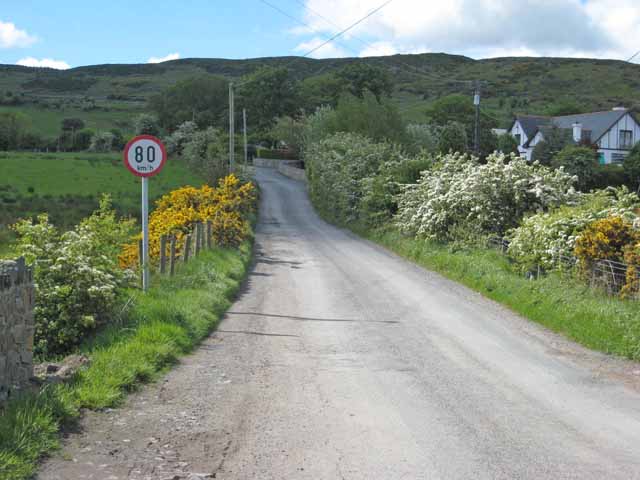
The Border on Killeen School Road, 2017. There is no indication that one is going into the Republic of Ireland, besides the speed sign which is in Kilometres per hour. Northern Ireland uses Miles per hour.

While cultural boundaries were more difficult to overcome because of historical memory, physical borders themselves were easier to control.

As seen in the first image above, the border was policed through the use of the military and police. People could not freely cross the orders without being subjected to searches and checkpoints due to mistrust between Irish Catholics and English Protestants.

However, as the years went on, it became easier to cross borders more freely because of the demilitarization of borders. As seen in the second image, there is no checkpoint or military personnel indicating that one is entering or exiting Northern Ireland. The only indication is a speed sign. “Crossing the border between Northern Ireland and the Irish Republic used to involve delays, checkpoints, bureaucratic harassment and the lurking threat of violence. That it’s now virtually seamless — that you can drive across without even knowing it — feels close to miraculous” (2). While this process did take a while, it does show that the Belfast Agreement was successful in achieving peaceful borders that did not require armed guards or checkpoints.

The IRA also eventually gave up their arms in 2005 and disposed of them. They declared they will use peaceful tactics to achieve their goals.

By opening borders and disarming potentially threatening groups, this helped the North and South become more connected and feel less threaten by each other. “This city, this country, is like a woman who has given birth,” Mr. Lynn said. “All the trauma, the pain and the fighting are over. We’ve come out of the Troubles — out of black and white and into color” (2).

Although the Belfast Agreement was not a perfect peace treaty, it did its best to acknowledge major issues and dealt with it as best as it could. It tries it’s best to give both sides a voice and stressed the importance of cross-border relations. However, it was a difficult situation where there was no clear answer.

In order to keep the peace, the North and South must recognize and respect their differences and also find common ground where they can work together towards a brighter future for the entire land as a whole.


1. Northern Ireland Office. “The Belfast Agreement.” GOV.UK, 10 April 1998, www.gov.uk/government/publications/the-belfast-agreement.

2. Lyall, Sarah. “On Irish Border, Worries That ‘Brexit’ Will Undo a Hard-Won Peace.” The New York Times, 5 August 2017, www.nytimes.com/2017/08/05/world/europe/brexit-northern-ireland-ireland.html?action=click&module=RelatedCoverage&pgtype=Article®ion=Footer.


[Return to the Main Page]

Myth and Folklore

Yeats uses Celticism to counter these negative stereotypes such as those portrayed in the Punch cartoons. To understand Yeats’ complicated perspectives, it is helpful to know of his background: he is Irish but spent most of his early life in London. He is Protestant but not an imperialist; however, he supports Anglo-Irish leadership and the nationalists’ revolutionary efforts. Yeats’ views directly impact his complex perspective when it comes to his writing.
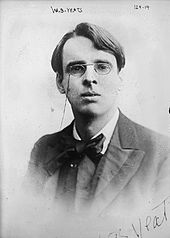
Similar to how Yeats’ attitudes contradict each other, his methods of portraying an ideal Irish identity are also complicated. Sometimes, being Irish is all about being tied to the unique landscape. Other times, he works toward formulating a more universal Celtic spirit that ultimately determines the ideal Irishness. These ideas negate each other — as soon as one is established, Yeats shuttles to the other one, creating an unstable tone. Despite Yeats’ efforts, there really is no true ideal.

The Celtic Twilight is one of Yeats’ earliest collections of works that aims to answer his question, “Can we not build up a national tradition, a national literature, which shall be nonetheless Irish in spirit from being English in language?” This discussion of ‘national’ ideas emphasizes the dismantling of stereotypes and pursuit of an ideal Irish identity.

An example of this negation between the two different ideas is evident in “A Voice.” In this work, Yeats begins by describing walking on “marshy ground” — a reference to the bogs of Ireland — before quickly moving into telling of being “preoccupied with Aengus and Edain, and with Manannan, God of the Sea”. This discussion of Irish folklore represents the Celtic spirit, yet it cancels out the landscape portion. In his attempt to disassemble the derogatory Irish stereotypes, Yeats tries to have these separate ideals both ways, which is unattainable.

Yeats:

Yeats uses Celticism to counter these negative stereotypes such as those portrayed in the Punch cartoons. To understand Yeats’ complicated perspectives, it is helpful to know of his background: he is Irish but spent most of his early life in London. He is Protestant but not an imperialist; however, he supports Anglo-Irish leadership and the nationalists’ revolutionary efforts. Yeats’ views directly impact his complex perspective when it comes to his writing.

Similar to how Yeats’ attitudes contradict each other, his methods of portraying an ideal Irish identity are also complicated. Sometimes, being Irish is all about being tied to the unique landscape. Other times, he works toward formulating a more universal Celtic spirit that ultimately determines the ideal Irishness. These ideas negate each other — as soon as one is established, Yeats shuttles to the other one, creating an unstable tone. Despite Yeats’ efforts, there really is no true ideal.

The Celtic Twilight is one of Yeats’ earliest collections of works that aims to answer his question, “Can we not build up a national tradition, a national literature, which shall be nonetheless Irish in spirit from being English in language?” This discussion of ‘national’ ideas emphasizes the dismantling of stereotypes and pursuit of an ideal Irish identity.

An example of this negation between the two different ideas is evident in “A Voice.” In this work, Yeats begins by describing walking on “marshy ground” — a reference to the bogs of Ireland — before quickly moving into telling of being “preoccupied with Aengus and Edain, and with Manannan, God of the Sea”. This discussion of Irish folklore represents the Celtic spirit, yet it cancels out the landscape portion. In his attempt to disassemble derogatory Irish stereotypes, Yeats tries to have these separate ideals both ways, which is unattainable.

The Celtic Ideal: The Warrior and the Druid

The ancient Celts, the origin of much of Ireland’s mythology and folklore, were warrior people. The Celts idealized courage, wisdom, eloquence and cunning in their warriors and emphasized the importance of an “agrarian society that venerates nature.” These beliefs have survived through the myths and folklore that permeate Irish culture. In his article, “The Prisoners of the Gods” (1898), Yeats said, “the peasants believe in their ancient gods and that to them, as to their forbears, everything is inhabited and mysterious. The gods gather in raths or forts, and about the twisted thorn trees, and appear in many shapes, now little and grotesque, now tall, fairhaired and noble, and seem busy and real in the world, like the people in the markets or at the crossroads.” Even as modernity encroached on Ireland, its people held onto that magic passed onto them for centuries.
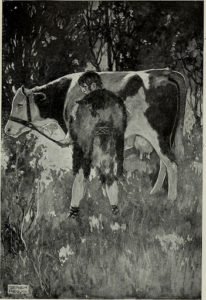
From an outside perspective, especially that of the English who sought to conquer these people, the Irish likely seemed superstitious and strange. Long after most nations had moved onto prayer and sermons, the Irish still spoke as if the gods walked among them and faeries lived in the hills. Alongside their general scorn for materialism and urbanization, these “pagan” beliefs would have set the Irish apart from the English in a way that was not easily reconciled. When stereotypes of Irish barbarism, and uncivilized pagan customs emerged, the English likely felt somewhat justified while the Irish recognized such labels as an attack on their culture and national identity.

When Revivalists, such as Yeats, and nationalist politicians, such as De Valera, proposed the Irish ideal as a return to the country-side, a rejection of materialism, and an embracement of tradition and the family, they reintroduced timeless Celtic ideals to the Irish public. Rather than accepting criticism of their culture, the Irish held fast to their cultural identity and sought to replace derogatory stereotypes with the image of Ireland as it once was. The problem with this approach is that while is succeeded in some part by reinvigorating Irish culture, it was also unrealistic. Progress required modernization, and while Ireland continued to urbanize and progress as a country, the Irish people were also being encouraged to embrace tradition and the simple, country life. For many people struggling to survive in cities, such as Dublin, the Irish ideal was impossible to meet.

Click here to return to front page.
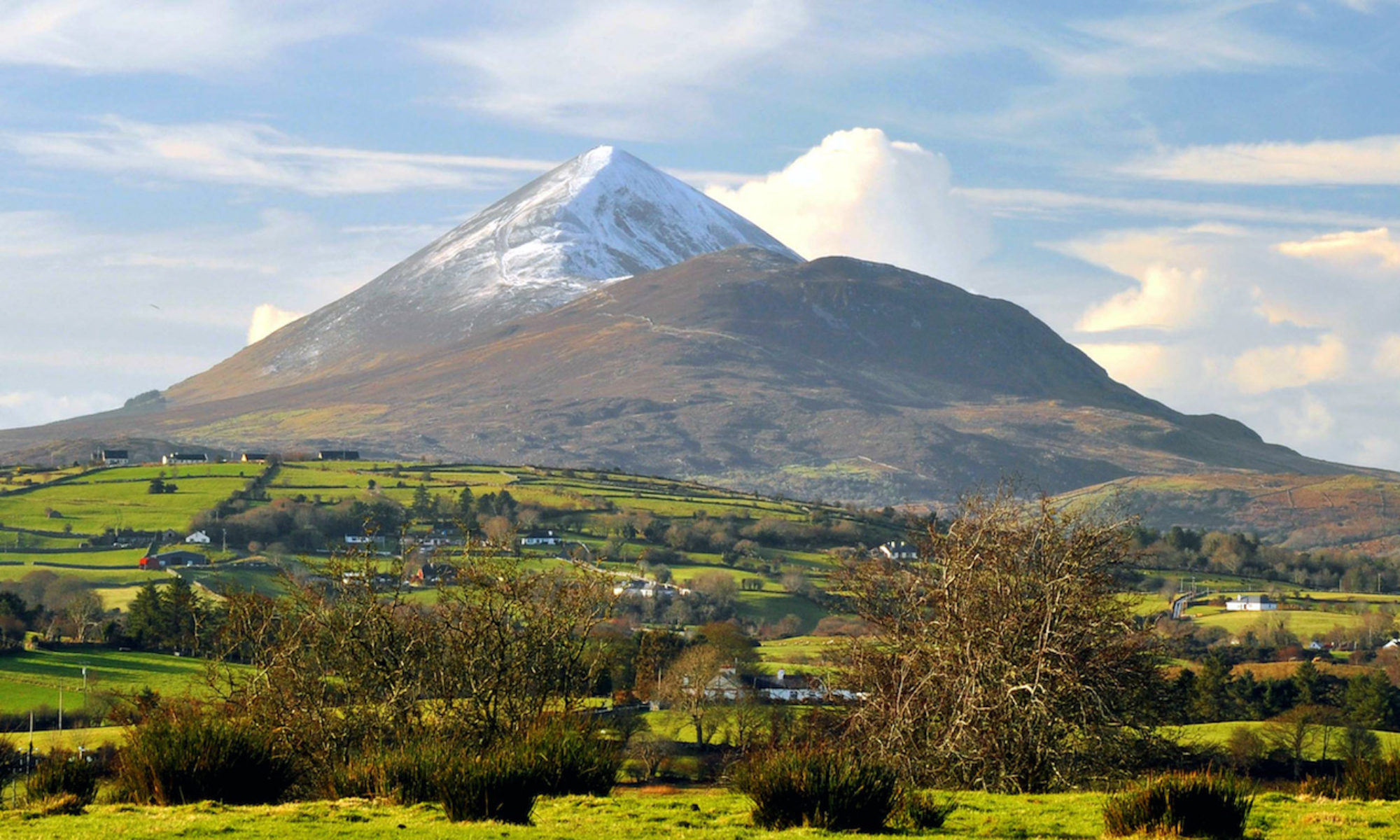
Romanticized People

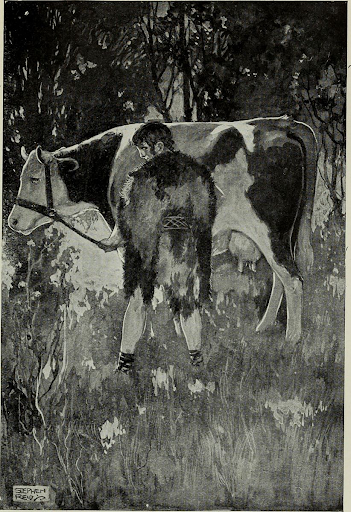
The notion of Ireland brings together different opinions, though romanticizing has been very prevalent across artists, authors, and notorious people. J.M. Synge was an Irish author who spent time on the Aran Islands, recording his experiences and thoughts. Many of these thoughts were contained comments in which he romanticized the landscape, the people, and the lifestyle. Romanticizing a people is one story of how the author wants them to be, where Synge has decided the lifestyle he finds best. He refers to the way the people have been shaped into perfect humans due to their life on the islands, comparing them to animals. “The agile walk of the wild animal” is how he describes the people, treating them as more of a thing to behold rather than a human being. While this can be seen as a positive in form of the people and being opposed to normal negative aspects, Synge is choosing how to present the Irish people as a whole to the world. There is no diversity in this way of expression and it enforces that the people are simple, primal, and nature-oriented. 


This photo taken by J.M. Synge is his expression of the Ideal in the Aran Islands . The simplistic work lifestyle and the “perfect” body ready for ding what it must, formed from life on the islands.

Eamon De Valera employs a similar tactic, treating the landscape as a catalyst for nationalism. He reminds the people of how the landscape is and can be if people return it to that beauty. Romanticizing a landscape can be dangerous though, as this then excludes all of the people who are poor and live in dilapidated cities. He describes the picturesque landscape of Ireland with rolling hills and unending green. These factors are lost on people who do not live that exclusive lifestyle. Acting as the leader of a whole group of people, exclusivity is brought only to some who agree. The power dynamic here is drawn from the Ideal Ireland as De Valera uses the beauty to keep nationality as the primary cause. 

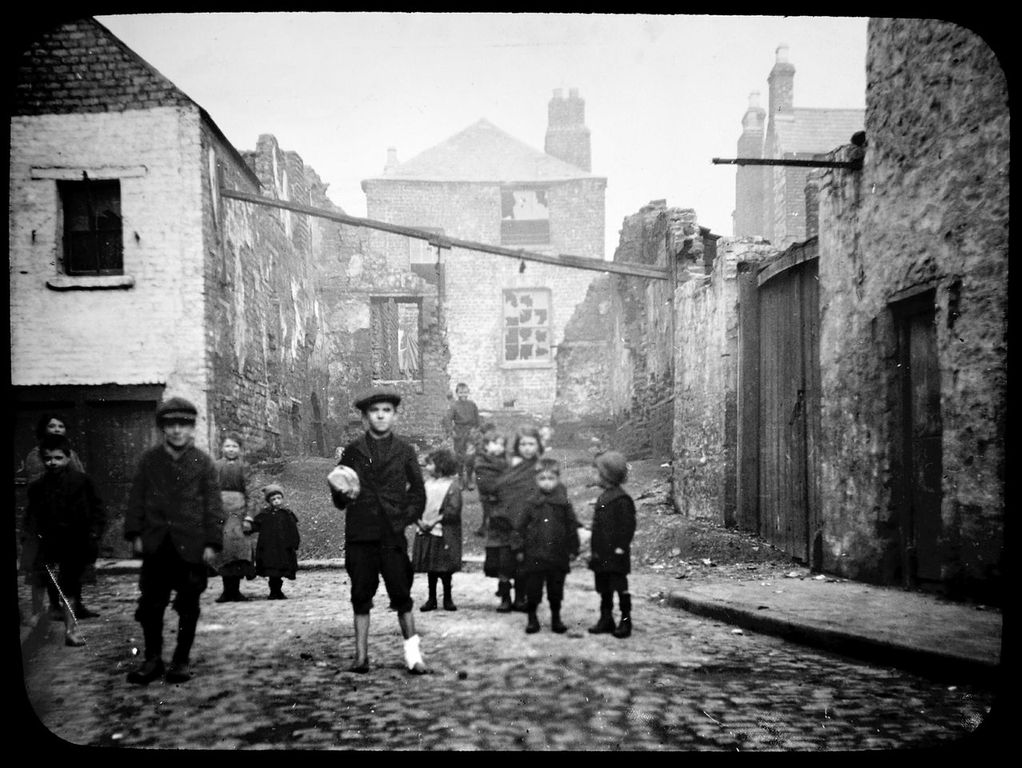
The ideal, rural Ireland is one that is often in the public eye. The “authenticity” then rests in the hands of photographs from urban Ireland. Here we see the dilapidated buildings and broken down cities, as well as the poor and injured children. This is the opposite of the stereotypical ideal.

The image above of the boy in urban Ireland is important because the Irish Revivalists like Synge and Yeats mostly portray the ideal as being connected to an urban landscape. The Revivalists are searching for an ideal and in their search, they completely ignore an entire aspect of Irish culture. When thinking of the Irish ideal, the common thought is the beauty of landscape. The urban life has been lost in the search, putting the Revivalists in yet another single story category.

William Butler Yeats often does the same thing as De Valera, employing the beauty and simplicity of Irish life that only applies to some. In his poem, The Lake Isle of Innisfree, Yeats describes the return to this island in which he will live a simple but fulfilled lifestyle. As a romanticization, this can be considered negative because people who read his poem will imagine a united Ireland in this one sense. That united Ireland is a stereotype single story that is often expressed, that the simplicity is the key to an Ideal life. While this can be a fine opinion of a single person, presenting the opinion to readers who will succumb to the ideal is negative. The public may then see Ireland as ideal but they will also consider the people to be altogether simple, with a lack of any diversity or room for difference. 

Something that both Yeats and Synge do is that they rewrite how certain views of the Irish are interpreted. As a stereotype, aspects such as mysticism, language, and a simplistic lifestyle have been considered wrong. They were motives for oppression because those aspects were uncivilized and the Irish were viewed as not being true humans or being treated in a human way. Yeats uses a significant amount of mysticism and Celticism in his works but this is the idealized version, moving towards a positive rather than a negative. These are virtuous and considered a value when Yeats portrays them. A similar view is how Synge idealizes the people of the Aran Islands. As discussed before, he has a view of what makes their bodies perfect. Leaving out whether this is negative or positive, the stereotype here has shifted from barbaric to an adapted to their environment people due to Synge’s works.

Click here to return to front page.
Irish Stereotypes

On one of our first days of class, we discussed topics that we stereotypically associate with Ireland. The following ideas came to mind: overconsumption of alcohol, having a lot of babies, the color green, sheep, bogs, potatoes, emotionally sporadic, and poverty. The idea that thinking of Ireland sets off mental triggers for certain words is very ill-advised, it paints a diverse Ireland in a way that can be summarized by one word. This is not only simply wrong, but it is damaging to the people, the culture, the economy, and the view from other parts of the world. 

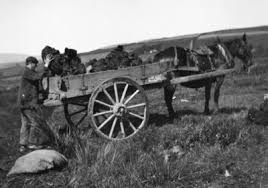
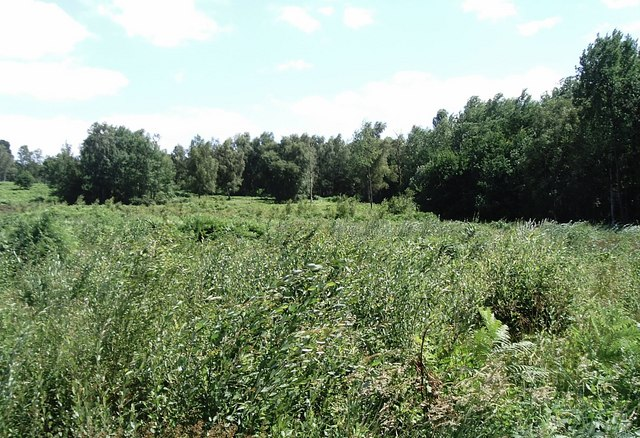
This is a bog in Ireland, something that is not the entire country but is simply thought of when hearing the name “Ireland”.

These responses are both positives and negatives, but what they all have in common is their contribution to creating a national identity.  A lot of stereotypes can be discussed as having a grain of truth based on the idea of landscape. The problem with this type of thinking is that Ireland as a whole is categorized under these modes, preserving Ireland as a single story to the rest of the world. Additionally, these stereotypes were used in literature.

William Butler Yeats employed some of these stereotypes in order to make his works that would be vague more ‘Irish’ to appeal to a more specific audience. Specifically, The Celtic Twilight by Yeats contains many works pertaining to the Irish landscape in particular. In his folklore tale, “A Voice”, these generalizations are made by the description of “marshy ground” (like bogs), and children dressed in olive green clothing. However, this examination of stereotypically Irish things backfires when there is mention of something beyond the general knowledge of outsiders to Irish culture: Yeats writes that he was “preoccupied with Aengus and Edain, and with Manannan, God of the Sea” — this radically excludes a wider audience. The exclusion and inclusion of certain types of audiences is very interesting, as Yeats can be argued to be someone who was delivering positive stereotypes. The positive stereotypes are the beauty of Ireland and the simplicity of this life he wishes to return to. Though, the simplicity as also quite the problem because of thinking Ireland is just a simple place while it has cities as well. Especially during the time of Yeats, Dublin would have been very populated. 

As discussed in another page, J.M. Synge is another who has contributed to the single story issue. He tends to portray the Aran Islands in a way that it is Ireland completely and the lifestyle there is found all over the country.

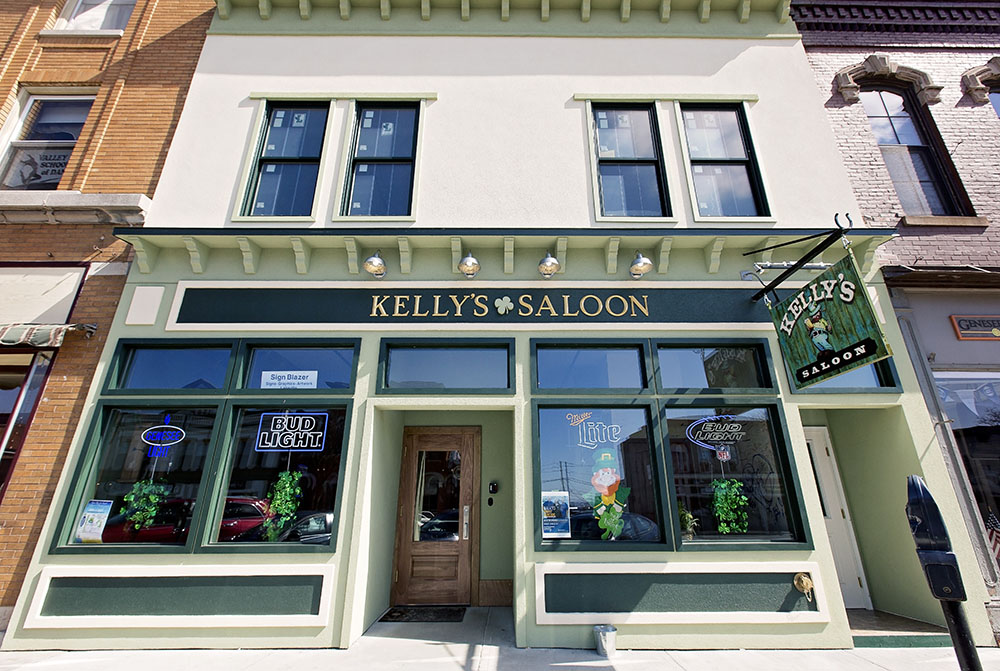
Irish Stereotypes like Celticism ingrained in everything are prevalent throughout the world which shows that the single stories have been bought into. That dangerous exchange of power makes Ireland seem simple and it is often found with things like alcohol and bars. Many “Irish” bars in United States are portrayed with Celtic imagery or most often: Leprechauns and clovers.

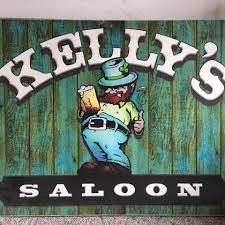
The bar pictured above is a prime example for how the Irish stereotypes are played out in the world. This is Kelly’s Saloon, an establishment that portrays many of the negative aspects that can be thought of for Irish Stereotypes. The name of the bar has a four-leaf clover in it, everything is green, and the sign is the particularly harmful aspect. 

The most harmful piece of this sign is the symbol being a “drunken Irishmen”. This is an extremely disrespectful image as it portrays the Irish this way entirely. The single image here connects to the idea of the single story, it is something that people will call towards their minds when they think of the Irish people from a simple stereotype plastered in the middle of a bustling town. That is the problem with having stereotypes so visible to the public, especially in an area that may not have a very large Irish population. The image will be seen and let to continue, portraying an entire country’s population as a single image.

The Irish ideal is looked for in many forms. Eamon De Valera has searched for this by demanding what he expects of people for a truly Irish person. He says “That Ireland which we dreamed of would be the home of a people who valued material wealth only as the basis of right living, of a people who were satisfied with frugal comfort and devoted their leisure to the things of the spirit-a land whose countryside would be bright with cosy homesteads” (De Valera 466). He is being exclusive to a certain group of people as well as making sure the average person is following the “ideal” life to bring back an “ideal” Ireland. It is significant that he uses the word “we” as a way to collectively use the entire Irish people as one mode of bringing back the Ideal, even if individuals do not necessarily agree.

Click here to return to front page. 
Impact of Language

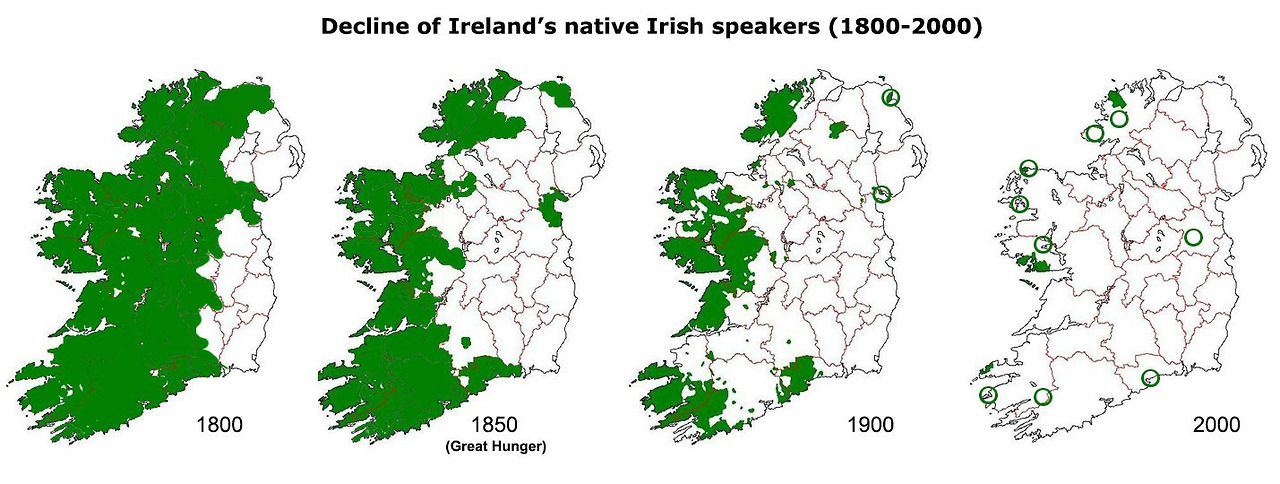
Language is an important factor in what is considered to be the ideal Ireland. The Irish Gaelic had dwindled as time passed and there have been revitalization attempts due to the association of Gaelic with Irish Identity.

Language itself is often used as a barrier or a way to oppress. Irish has been no exception and the motive for dehumanizing the Irish people early on was rooted in viewing the language as “barbaric”. The impact of language on how a culture is viewed shifts over time. Irish Gaelic was spoken more when it was considered “barbaric” and then dwindled over time. The continuous decline can be taken from the pressure put on Ireland during the time but then later, the language is seen to be something important for nationality. There is an embrace of the language and its ties to the landscape in which the people hold dear.

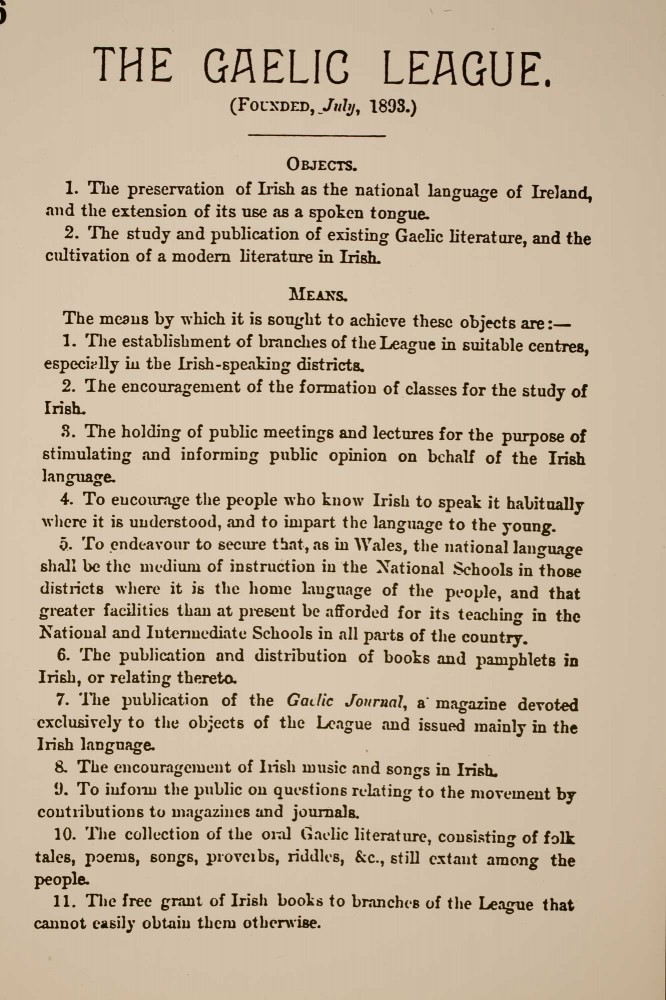
The Gaelic League, or Conradh na Gaeilge,  was a significant establishment founded in 1893 to revive the language. Classes ran all across the country that led a standardized way to reading and speaking. There were many works also published in Gaelic during this time of the Irish Revival. 

Douglas Hyde was a prominent figure in the Gaelic Literary Revival and published A Literary History of Ireland. This book was a good example of how the Gaelic League functioned due to it’s progression through time from an Irish perspective.   “Who were those Celts, of whose race the Irish are to-day perhaps the most striking representatives, and on whose past the ancient literature of Ireland can best throw light?” (Hyde 1).  The quotation brings with it a connotation of the leadership and merit of Ireland as well as the place in which these proud people of today have garnered their strong will. Hyde ends his book by exposing how the language is a failure because the education system has failed to promote it. He says about the system, “But even with the smallest philological regard for the meaning of words, it cannot be called education” (Hyde 637).

As language is held in high regard because of its association to Irish identity, many leaders have continuously brought the subject to the forefront of Irish politics. The problem with this mainstreamed view of the language is that it can e used to ostracize and punish, or it can be used to bolster national identity. Eamon De Valera in the 1943 speech The Ireland That We Dreamed of, relied on the comeback of Gaelic for the revitalization of an independent Ireland. While this isn’t negative on its own, people who did not speak the language felt left out as De Valera put responsibility on the individual to constantly use Gaelic. Those who disagreed with De Valera could be considered opposed to nationalism and an independent Ireland. This narrow margin for authentic Irish is very exclusive to people who agree and support De Valera’s methods. De Valera also titled his speech in a way that the language is associated with the beauty and good-nature Ireland, placing people who do not speak Gaelic as someone who opposes Ireland altogether.  The revitalization argument can be supported with seeing how the prevalence of the language has been constantly decreasing.


There is even an association called the Gaelic League in Detroit that serves to preserve and promote Irish culture or tradition. While not exactly the same, it is interesting to see a comparison in America to the Gaelic League in Ireland. The reason for bringing up this website is the expression of Irish Identity outside of Ireland itself. From someone like De Valera, there is no authenticity because the true Irish is tied to the landscape and to an extreme nationality. This is again exclusive, leaving out a greta number of Irish people who have emigrated and want to be included in their heritage. Does De Valera agree with these people outside of Ireland speaking the language or does revitalization only have a place in the actual country? Language allows for a sense of place and folks outside of the actual country of Ireland can still want that feeling. The tie into Irish culture is prevalent, even in places like Detroit (among others). Their website can be found here.

Click here to return to front page. 
 

The Story of Mitchelstown Castle (why it makes sense that it was destroyed)

Mitchelstown Castle found in “Views of the seats of noblemen and gentlemen, in England, Wales, Scotland and Ireland.”

Throughout the semester we, as a class, have discovered an Irish landscape of constant change, whether forced or not. Mitchelstown Castle, known as the biggest castle in Ireland in its time, has long been embroiled in the constantly changing landscape and culture of Ireland. The castle, up until its burning and later destruction, was ruled by several different Irish protestant upper class families. It is through Mitchelstown Castle specifically, that we can see a smaller and confined history of Ascendency rulers, one that is eerily reminiscent of the changing landscape of Ireland over time and that of the Ascendency Class. Mitchelstown Castle offers a microcosm of Ireland rarely seen in other big houses, due to its extensive historical records, consistent standing in the public eye, and its long history of having rulers who sought to show their dominance at great cost to themselves.

    The Early Instability and Tensions of Mitchelstown Castle

The original rulers of Mitchelstown Castle, the White Knights or Family Fitzgibbon, would consistently clash with the Irish public.

The first rulers of Mitchelstown Castle were the White Knights or Fitzgibbon family who gained control in the year 1340. The White Knights soon fell out of favor with the public, due mostly to their overconfidence and open belief in superiority over the Irish public. The castle would be lost and regained in 1576, but a rival of the Fitzgibbons who was fed up with their pompous attitude and rash decisions, would lay siege to the castle and bring an end to the rule of the White Knights. With the origins of the castle one can see an Ireland of instability and conflicting beliefs, one where the arrogance of the Ascendency class would only stand for so long.  


The Ignorant Views of the King Family

The first Earl of Kingston, a member of the infamous ruling family of Mitcheltown Castle, the King family.

The King family gained power in 1650 with the marriage of Sir John King and Catherine Fenton. Their son, John King, ignited the early scandals of the King family. John had differing ideas than the members of his family, to put it lightly, none more shocking to his family than his decision to marry an Irish and Catholic woman. The King family was not afraid to voice their opinion on the matter, “Few of the nobility of English extraction have ever contracted marriage with Irish papists, but none have married one who was at once an ordinary Servant Maid and an Irish Papist Bitch who had neither Charms of Beauty nor genteel behavior nor agreeableness of conversation” (1). The rulers of Mitchelstown Castle openly pitted themselves against the public and signaled the true thoughts of the Ascendency class on the Irish Catholic population. Through Mitchelstown Castle, one can see an Ireland split between a small class of extremely powerful protestant rulers and a massive Catholic population that was fed up with their situation. 

The Cracks Began to Show

The Irish Rebellion of 1798 was a bloody and gruesome war in which Mitchelstown Castle played a pivotal role.

As the Irish rebellion of 1798 came into focus, the King family’s strong belief in their superiority over the Irish would be tested. The castle needed change too as two of its rulers, both named Robert King (father and son), were on trial for murder during the Irish rebellion. Within the castle itself was growing tension, as George King and Margaret King  had differing support for the two sides of the Irish rebellion of 1798. Margaret King was a staunch supporter of the United Irishmen, while her brother formed an infamous terrorist group designed to kill and torture the United Irishmen.  With the rebellion of 1798, Mitchelstown Castle seemed vulnerable, as the Ascendency class of the castle appeared to be growingly susceptible to the Irish people’s actions and to their own, signaling a shift in the tide of power to come in the future. Adding to this, was the fact that members of the King family openly voiced support for the United Irishmen, splitting their once united hatred of the Irish Catholic population into several different pieces and revealing the cracks within the once all-powerful Protestant upper class of Ireland.

The Ascendency’s Self-Implosion 

The Great Famine brought Ireland into ruin, while Mitchelstown Castle took a major blow as well.

The Great Famine brought Ireland into doom, half of the population was either dead or no longer in Ireland. In 1823 however, Big George Kingsborough, the new patriarch of the castle, felt it necessary to destroy Mitchelstown Castle and build the biggest castle of Ireland, “I am no judge of architecture; but it must be larger than any other house in Ireland” (1). The castle would go under at the hands of Edward Viscount Kingsborough, Big George’s son, who sought to further demonstrate the family’s influence with a massive accumulation of books for their library. His actions revealed an Ascendency class that had lost itself in dreams of luxury, “It is like that almost everywhere in Ireland. Witness the finger of God. The Irish aristocracy wanted to remain separate from the people and be still English. It has driven itself into imitating the English aristocracy without possessing either its skill or its resources, and its own sins is providing ruin” (1). With the destruction of the famine, Ireland had fallen into despair, but so too had the Irish upper class, as their own arrogance would ruin everything they touched, Mitchelstown Castle was far from an exception. 

The 1916 Easter Rising was the final straw for Mitchelstown Castle and the Anglo-Irish upper class. Shown above is the destruction of Sackville Street during the Easter Rising.

The Easter Rising was another failed attempt to gain independence from England and the oppressive Protestant ruling class. The new ruling family of Mitchelstown Castle, the Webbers, would follow in the footsteps of the illustrious former rulers of the castle by completely sullying the little reputation the castle had regained from their massive debt debacle. The Webbers would openly announce their disdain for the Irishmen who started the Easter Rising, even going as far as to advocate for the execution of every member of the uprising. Thus, painting a clear target on their own heads and making it eminently clear that the traditional view of hatred for the Irish population seen in Mitchelstown Castle and the Ascendency class  had changed very little over the years. Their demise is summed up with this quote, “It is like that almost everywhere in Ireland. Witness the finger of God. The Irish aristocracy wanted to remain separate from the people and be still English. It has driven itself into imitating the English aristocracy without possessing either its skill or its resources, and its own sins is providing ruin.” (1)

Works Cited

(1) Power, Bill. White Knights, Dark Earls.Dublin: Collins Press, 2000

[Home Page] [Main Focus] [Bowens Court] [Danielstown] [Burning and Destruction]

Dismantling Stereotypes: The Pursuit of an Ideal

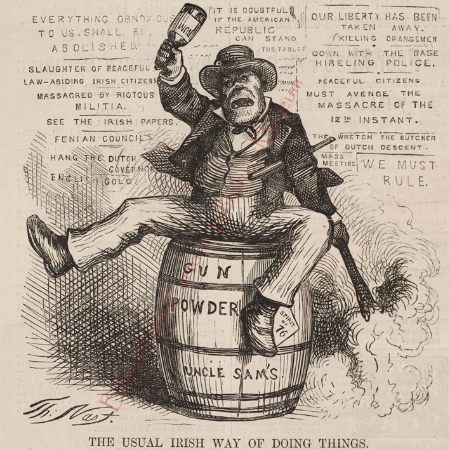
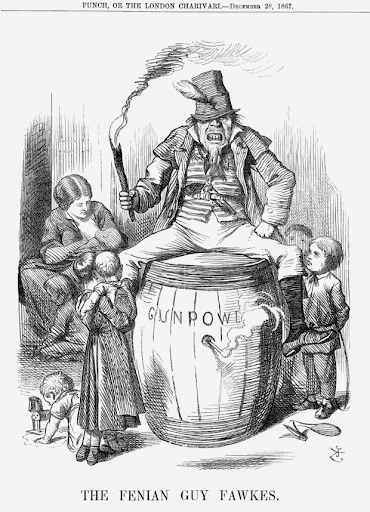
We’re all familiar with Irish stereotypes. There are commonly known ones that have a negative impact on the people as a whole: being drunk, having a lot of children, and poverty. These negative traits have been established through history as a mode of oppression. As a group, we have looked into how these stereotypes influence the view on an ideal or authentic Ireland. How do the negatives affect nationality or the view of famous Irish people.  Examples of how Irish people were treated can be seen in various political cartoons:

In this image by Thomas Nast, we see the stereotypical and awful view of an Irish man with a face like an ape. This showcases the negative perspective on the Irish — to this artist, they are primitive. He sits atop a barrel of gunpowder carelessly, bottle of rum in hand.

Here is a similar, more telling cartoon. Notice the aggression in the man’s face, the pose, and the many children surrounding him. Spot the woman fading in the corner, feeding another child. The detail that she is in the background tending to the young ones alone emphasizes the man’s uncaring and wild nature.

As can be seen, the Irish have been depicted with overwhelmingly negative stereotypes. As a way to counter these derogatory labels, various writers have responded by pursuing an ideal Ireland. Throughout this web-page, we aim to analyze the romanticization of the landscape.

What makes this pursuit of the ideal so complicated is the way it constantly contradicts itself: while the Irish people are sensitive to diversity, something pure ties them together.

The focus of this web-page is on the idea of how stereotypes function and how they influence what is said to be ideal or authentic. There are many ways to dissect this and we have broken down several ways to analyze the negative or positive aspects to what these stereotypes do:


Intro to Big House Burnings

About Us:

Welcome to our site on the burning of Irish Ascendency Houses (or Big Houses). We are focusing on two Big Houses: Mitchelstown Castle and the fictional Danielstown. Throughout the semester we have been learning about Irish landscape and history and we have decided to focus specifically on how our individual big houses can be seen as a microcosm of the changing Irish landscape leading to the decline of the Ascendancy.

I am Nick Widman and I came up with my individual project after taking many suggestions from the professors and realizing that if I focused on one house in Ireland I could use it as a representation of the whole of Ireland. I chose Mitchelstown castle because it was the biggest big house of them all and later I realized that the castle had a surprisingly ridiculous history of tension and instability as well. This worked together greatly with the idea of tying one big house to Ireland as Ireland had a far from mundane history which could be tied well with the exploits of Mitchelstown Castle.   Our project came together through realizing that our individual projects could be focused on the idea of a crumbling Ascendency hold on Ireland due to the Ascendency’s own actions.

I’m Hannah Fuller and I chose to write my individual project on the burning of big houses with a more narrowed look into The Last September by Elizabeth Bowen. I felt that the novel’s portrayal of how the Ascendency handled the potential threat of the decline of their power was very interesting, and as I did further research (along with suggestions from my professors) that this fear was based on a feeling of liminality. This sense of in-between-ness can be seen not only through the characters in the novel, but was the reality for many Anglo-Irish.

Map Of Site:

[Main Focus]- Here we draw connections about the underlying themes of our separate projects, pulling threads from our individual topics and tying them together to form one cohesive project about the fragility and liminality of the Ascendency that would lead to their decline.

[Mitchelstown Castle]- Mitchelstown Castle was infamous for its massive size, but the real focus should be put on its various owners who ultimately contributed to their own downfall. The owners felt the need to dominate the Irish landscape due to their liminality. The castle therefore stands as a symbol of the Irish Ascendency and their overconfidence that would be their demise.

[Bowens Court]- Elizabeth Bowen spent some of her time in Cork, Ireland, in the Big House, Bowens Court. While this home was never actually burned, it was abandoned and later torn down. Bowen herself felt an immense sense of liminality that would serve as inspiration for her novel, The Last September.

[Danielstown]- Author Elizabeth Bowen writes of a fictional town named Danielstown, the site of the Naylors Ascendency home, in her novel The Last September. Although fictional, this Big House represents the fears many land owners had about the decline of the Ascendency lifestyle and was the site of one of the many burnings during this time. Due to the character’s inaction, and an already crumbling Ascendency, the house was burnt down and served as a reminder that this sense of liminality had no place in Ireland.

[Burning and Destruction]- The burning and eventual destruction of Mitchelstown Castle and the fictional Danielstown home symbolized the end to centuries of power, torment, and isolation of the Ascendency from the rest of Ireland. The use of fire physically cleansed the landscape of these homes but the real destruction took place by the hands of the owners.