Coursepack on the Anglo-Irish Treaty

THE TREATY

Excerpts from the Anglo-Irish Treaty (6 December 1921)
Full text at http://cain.ulst.ac.uk/issues/politics/docs/ait1921.htm

1. Ireland shall have the same constitutional status in the Community of Nations known as the British Empire as the Dominion of Canada, the Commonwealth of Australia, the Dominion of New Zealand and the Union of South Africa, with a Parliament having powers to make laws for the peace, order and good government of Ireland and an Executive responsible to that Parliament, and shall be styled and known as the Irish Free State.

3. The representative of the Crown in Ireland shall be appointed in like manner as the Governor-General of. Canada and in accordance with the practice observed in the making of such appointments.

4. The oath to be taken by Members of the Parliament of the Irish Free State shall be in the following form:

I ………………. do solemnly swear true faith and allegiance to the Constitution of the Irish Free State as by law established and that I will be faithful to H.M. King George V, his heirs and successors by law, in virtue of the common citizenship of Ireland with Great Britain and her adherence to and membership of the group of nations forming the British Commonwealth of Nations.

7. The Government of the Irish Free State shall afford to His Majesty’s Imperial Forces:

(a) In time of peace such harbour and other facilities as are indicated in the Annex hereto, or such other facilities as may from time to time be agreed between the British Government and the Government of the Irish Free State; and

(b) In time of war or of strained relations with a Foreign Power such harbour and other facilities as the British Government may require for the purposes of such defence as aforesaid.

8. With a view to securing the observance of the principle of international limitation of armaments, if the Government of the Irish Free State establishes and maintains a military defence force, the establishments thereof shall not exceed in size such proportion of the military establishments maintained in Great Britain as that which the population of Ireland bears to the population of Great Britain.

11. Until the expiration of one month from the passing of the Act of Parliament for the ratification of this instrument, the powers of the Parliament and the Government of the Irish Free State shall not be exercisable as respects Northern Ireland and the provisions of the Government of Ireland Act, 1920, shall so far as they relate to Northern Ireland remain of full force and effect, and no election shall be held for the return of members to serve in the Parliament of the Irish Free State for constituencies in Northern Ireland, unless a resolution is passed by both Houses of the Parliament of Northern Ireland in favour of the holding of such election before the end of the said month.

16. Neither the Parliament of the Irish Free State nor the Parliament of Northern Ireland shall make any law so as either directly or indirectly to endow any religion or. prohibit or restrict the free exercise thereof or give any preference or impose any disability on account of religious belief or religious status or affect prejudicially the right of any child to attend a school receiving public money without attending religious instruction at the school or make any discrimination as respects state aid between schools under the management of different religious denominations or divert from any religious denomination. or any educational institution any of its property except for public utility purposes and on payment of compensation.

On behalf of the British Delegation.
D. LLOYD GEORGE.
AUSTEN CHAMBERLAIN.
WINSTON S. CHURCHILL.
L. WORTHINGTON-EVANS.
HAMAR GREENWOOD.
GORDON HEWART.

On behalf of the Irish Delegation.
ART Ó GRÍOBHTHA (ARTHUR GRIFFITH).
MICHEAL Ó COILÉAIN.
RIOBÁRD BARTÚN.
EUDHMONN S. Ó DÚGÁIN.
SEÓRSA GHABHÁIN UÍ DHUBHTHAIGH.


AGAINST THE TREATY

Excerpts from Eamon de Valera, Speech against the Treaty in the Dáil Éireann (19 December, 1921)
Full debate at:  http://historical-debates.oireachtas.ie/D/DT/D.T.192112190002.html

I think it would scarcely be in accordance with Standing Orders of the Dçil if I were to move directly the rejection of this Treaty. I daresay, however, it will be sufficient that I should appeal to this House not to approve of the Treaty. We were elected by the Irish people, and did the Irish people think we were liars when we said that we meant to uphold the Republic, which was ratified by the vote of the people three years ago, and was further ratified – expressly ratified – by the vote of the people at the elections last May? When the proposal for negotiation came from the British Government asking that we should try by negotiation to reconcile Irish national aspirations with the association of nations forming the British Empire, there was no one here as strong as I was to make sure that every human attempt should be made to find whether such reconciliation was possible. I am against this Treaty because it does not reconcile Irish national aspirations with association with the British Government. I am against this Treaty, not because I am a man of war, but a man of peace. I am against this Treaty because it will not end the centuries of conflict between the two nations of Great Britain and Ireland.

We went out to effect such a reconciliation and we have brought back a thing which will not even reconcile our own people much less reconcile Britain and Ireland.

If there was to be reconciliation, it is obvious that the party in Ireland which typifies national aspirations for centuries should be satisfied, and the test of every agreement would be the test of whether the people were satisfied or not. A war-weary people will take things which are not in accordance with their aspirations….

I wanted, and the Cabinet wanted, to get a document we could stand by, a document that could enable Irishmen to meet Englishmen and shake hands with them as fellow-citizens of the world. That document makes British authority our masters in Ireland. It was said that they had only an oath to the British King in virtue of common citizenship, but you have an oath to the Irish Constitution, and that Constitution will be a Constitution which will have the King of Great Britain as head of Ireland. You will swear allegiance to that Constitution and to that King; and if the representatives of the Republic should ask the people of Ireland to do that which is inconsistent with the Republic, I say they are subverting the Republic. It would be a surrender which was never heard of in Ireland since the days of Henry II.; and are we in this generation, which has made Irishmen famous throughout the world, to sign our names to the most ignoble document that could be signed.

When I was in prison in solitary confinement our warders told us that we could go from our cells into the hall, which was about fifty feet by forty. We did go out from the cells to the hall, but we did not give our word to the British jailer that he had the right to detain us in prison because we got that privilege. Again on another occasion we were told that we could get out to a garden party, where we could see the flowers and the hills, but we did not for the privilege of going out to garden parties sign a document handing over our souls and bodies to the jailers. Rather than sign a document which would give Britain authority in Ireland they should be ready to go into slavery until the Almighty had blotted out their tyrants. If the British Government passed a Home Rule Act or something of that kind I would not have said to the Irish people, “Do not take it”. I would have said, “Very well; this is a case of the jailer leading you from the cell to the hall,” but by getting that we did not sign away our right to whatever form of government we pleased.  I regard myself here to maintain the independence of Ireland and to do the best for the Irish people, and it is to do the best for the Irish people that I ask you not to approve but to reject this Treaty.

You will be asked in the best interests of Ireland, if you pretend to the world that this will lay the foundation of a lasting peace, and you know perfectly well that even if Mr. Griffith and Mr. Collins set up a Provisional Government in Dublin Castle, until the Irish people would have voted upon it the Government would be looked upon as a usurpation equally with Dublin Castle in the past. We know perfectly well there is nobody here who has expressed more strongly dissent from any attacks of any kind upon the delegates that went to London than I did.

The Irish people would not want me to save them materially at the expense of their national honor. I say it is quite within the competence of the Irish people if they wished to enter into an association with other peoples, to enter into the British Empire; it is within their competence if they want to choose the British monarch as their King, but does this assembly think the Irish people have changed so much within the past year or two that they now want to get into the British Empire after seven centuries of fighting? Have they so changed that they now want to choose the person of the British monarch, whose forces they have been fighting against, and who have been associated with all the barbarities of the past couple of years; have they changed so much that they want to choose the King as their monarch? It is not King George as a monarch they choose: it is Lloyd George, because it is not the personal monarch they are choosing, it is British power and authority as sovereign authority in this country.

I hold, and I don’t mind my words being on record, that the chief executive authority in Ireland is the British Monarch╤the British authority. It is in virtue of that authority the Irish Ministers will function. It is to the Commander-in-Chief of the Irish Army, who will be the English Monarch, they will swear allegiance, these soldiers of Ireland. It is on these grounds as being inconsistent with our position, and with the whole national tradition for 750 years, that it cannot bring peace. Do you think that because you sign documents like this you can change the current of tradition? You cannot. Some of you are relying on that “cannot” to sign this Treaty. But don’t put a barrier in the way of future generations.

Parnell was asked to do something like this -to say it was a final settlement. But he said, “No man has a right to set.” No man “can” is a different thing. “No man has a right” – take the context and you know the meaning. Parnell said practically, “You have no right to ask me, because I have no right to say that any man can set boundaries to the march of a nation.” As far as you can, if you take this you are presuming to set bounds to the onward march of a nation.


IN FAVOR OF THE TREATY

Excerpts from Michael Collins, The Path to Freedom (1922)
Full text at http://www.generalmichaelcollins.com/on-line-books/the-path-to-freedom-index/

After a national struggle sustained through many centuries, we have today in Ireland a native Government deriving its authority solely from the Irish people, and acknowledged by England and the other nations of the world. Through those centuries –  through hopes and through disappointments – the Irish people have struggled to get rid of a foreign Power which was preventing them from exercising their simple right to live and to govern themselves as they pleased, which tried to destroy our nationality, our institutions, which tried to abolish our customs and blot out our civilization, all that made us Irish, all that united us as a nation. But Irish nationality survived. It did not perish when native government was destroyed, and a foreign military despotism was set up. And for this reason, that it was not made by the old native government and it could not be destroyed by the foreign usurping government. It was the national spirit which created the old native government, and not the native government which created the national spirit. And nothing that the foreign government could do could destroy the national spirit. But though it survived, the soul of the nation drooped and weakened. Without the protection of a native government we were exposed to the poison of foreign ways. The national character was infected and the life of the nation was endangered. We had armed risings and political agitation. We were not strong enough to put out the foreign Power until the national consciousness was fully re- awakened. This was why the Gaelic Movement and Sinn FÄin were necessary for our last successful effort.

Success came with the inspiration which the new national movement gave to our military and political effort. The Gaelic spirit working through the Dáil and the Army was irresistible. In this light we must look at the present situation. The new spirit of self-reliance and our splendid unity, and an international situation which we were able to use to our advantage, enabled our generation to make the greatest and most successful national effort in our history. The right of Ireland as a nation under arms to decide its own destiny was acknowledged.

We were invited to a Peace Conference. With the authority of Ireland’s elected representatives negotiations were entered into between the two belligerent nations in order to find a basis of peace. During the war we had gathered strength by the justice of our cause, and by the way in which we had carried on the struggle. We had organised our own government, and had made the most of our military resources. The united nation showed not only endurance and courage but a humanity which was in marked contrast with the conduct of the enemy. All this gave us a moral strength in the negotiations of which we took full advantage. But in any sane view our military resources were terribly slender in the face of those of the British Empire which had just emerged victorious from the world war. It was obvious what would have been involved in a renewal of armed conflict on a scale which we had never met before. And it was obvious what we should have lost in strength if the support of the world which had hitherto been on our side had been alienated, if Ireland had rejected terms which most nations would have regarded as terms we could honourably accept. We had not an easy task.

We have to face realities. There is no British Government any longer in Ireland. It is gone. It is no longer the enemy. We have now a native government, constitutionally elected, and it is the duty of every Irish man and woman to obey it. Anyone who fails to obey it is an enemy of the people and must expect to be treated as such. We have to learn that attitudes and actions which were justifiable when directed against an alien administration, holding its position by force, are wholly unjustifiable against a native government which exists only to carry out the people’s will, and which can be changed the moment it ceases to do so. We have to learn that freedom imposes responsibilities. This parliament is now the controlling body. With the unification of the administration it will be clothed with full authority. Through the parliament the people have the right, and the power, to get the constitution, the legislation, and the economic and educational arrangements they desire. The courts of law, which are now our own courts, will be reorganised to make them national in character, and the people will be able to go to them with confidence of receiving justice. That being so, the Government believes it will have the whole force of public opinion behind it in dealing sternly with all unlawful acts of every kind, no matter under what name of political or patriotic, or any other policy that may be carried out.

The National Army, and the new Irish Police Force, acting in obedience to the Administration, will defend the freedom and rights of the Nation, and will put down crime of whatever nature, sectarian, agrarian or confiscatory. In the special circumstances I have had to stress the Government╒s determination to establish the foundations of the state, to preserve the very life of the Nation. But a policy of development is engaging the attention of all departments, and will shortly be made known. We have a difficult task before us. We have taken over an alien and cumbersome administration.

We have to begin the upbuilding of the nation with foreign tools. But before we can scrap them we must first forge fresh Gaelic ones to take their place, and must temper their steel. But if we will all work together in a mutually helpful spirit, recognising that we all seek the same end, the good of Ireland, the difficulties will disappear. The Irish Nation is the whole people, of every class, creed, and outlook. We recognise no distinction. It will be our aim to weld all our people nationally together who have hitherto been divided in political and social and economic outlook. Labour will be free to take its rightful place as an element in the life of the nation.

In Ireland more than in any other country lies the hope of the rational adjustment of the rights and interests of all sections, and the new government starts with the resolve that Irish Labour shall be free to play the part which belongs to it in helping to shape our industrial and commercial future. The freedom, strength, and greatness of the nation will be measured by the independence, economic well-being, physical strength and intellectual greatness of the people. A new page of Irish history is beginning. We have a rich and fertile country – a sturdy and intelligent people. With peace, security and union, no one can foresee the limits of greatness and well-being to which our country may not aspire. But it is not only within our country that we have a new outlook. Ireland has now a recognised international status. Not only as an equal nation in association with the British nations, but as a member of the wider group forming the League of Nations. As a member of these groups, Ireland’s representatives will have a voice in international affairs, and will use that voice to promote harmony and peaceful intercourse among all friendly nations. In this way Ireland will be able to play a part in the new world movement, and to play that part in accordance with the old Irish tradition of an independent distinctive Irish nation, at harmony, and in close trading, cultural, and social relations, with all other friendly nations. In this sense our outlook is new. But our national aim remains the same – a free, united Irish nation and united Irish race all over the world, bent on achieving the common aim of Ireland’s prosperity and good name.

Underlying the change of outlook there is this continuity of outlook. For 700 years the united effort has been to get the English out of Ireland. For this end, peaceful internal development had to be left neglected, and the various interests which would have had distinct aims had to sink all diversity and unite in the effort of resistance, and the ejection of the English power. This particular united effort is now at an end. But it is to be followed by a new united effort for the actual achievement of the common goal. The negative work of expelling the English power is done. The positive work of building a Gaelic Ireland in the vacuum left has now to be undertaken. This requires not merely unity, but diversity in unity.

When I supported the approval of the Treaty at the meeting of Dáil Éireann I said it gave us freedom – not the ultimate freedom which all nations hope for and struggle for, but freedom to achieve that end. And I was, and am now, fully alive to the implications of that statement. Under the Treaty Ireland is about to become a fully constituted nation.

The whole of Ireland, as one nation, is to compose the Irish Free State, whose parliament will have power to make laws for the peace, order, and good government of Ireland, with an executive responsible to that parliament. This is the whole basis of the Treaty. It is the bedrock from which our status springs, and any later Act of the British Parliament derives its force from the Treaty only. We have got the present position by virtue of the Treaty, and any forthcoming Act of the British Legislature will, likewise, be by virtue of the Treaty. It is not the definition of any status which would secure to us that status, but our power to make secure, and to increase what we have gained; yet, obtaining by the Treaty the constitutional status of Canada, and that status being one of freedom and equality, we are free to take advantage of that status, and we shall set up our Constitution on independent Irish lines.

No conditions mentioned afterwards in the Treaty can affect or detract from the powers which the mention of that status in the Treaty gives us, especially when it has been proved, has been made good, by the withdrawal out of Ireland of English authority of every kind. In fact England has renounced all right to govern Ireland, and the withdrawal of her forces is the proof of this. With the evacuation secured by the Treaty has come the end of British rule in Ireland. No foreigner will be able to intervene between our Government and our people. Not a single British soldier, nor a single British official, will ever step again upon our shores, except as guests of a free people

The Locavore Movement

6a0120a92e343a970b01a511f368c7970c

Throughout history, Ireland has undoubtedly had an economically and socially tumultuous relationship with food. The legacy of the Great Famine left residual effects on the country’s economy, only being worsened by the 2008 recession. However, emerging locavore, organic and slow food movements have sparked a foodie renaissance- helping to revive Ireland’s agricultural past and aid in the convalescence of the economy.

The concept of “homegrown” has swelled,with the evidence of food blogs, food tourism and organizations such as Good Food Ireland.

Food Summit with Good Food Ireland 2014:

Farmers, market operators, shop owners, and restaurateurs work together in production and promotion. Food trails and other “gastro tourism” opportunities, artisanal restaurants, family farms, festivals, and regional food specialties—such as Ard Cairn Russet apples, Burren honey, Clare Island salmon, Kerry lamb, or Knockdrinna Farmhouse cheese—reinforce Ireland’s food identity at home and abroad.1

cheeseawards2014.lowdef

food-kerryculinary_headerPhotoorg-slmn_side


There is also interest in health and sustainability, and knowing the origins of the food one eats. Bord Bia, Ireland’s national food board, along with the Department of Food, Agriculture, and the Marine (DAFM), help promote local offerings, providing information on producers, products, markets, and farm shops while raising awareness about the quality and cultural, economic, and nutritional significance of local food.1 According to Bord Bia research, conducted in November 2013, Irish consumers place great importance on sourcing food locally, with 7 in 10 adults considering buying local produce to be important when shopping for food.2

taste-of-dublin
The Taste of Dublin festival is set in the romantic Iveagh gardens, with four days of cooking demos (by Michelin starred chefs, tv chefs and emerging culinary stars) and various seafood tasting opportunities.

Tara McCarthy, Food and Beverage Director, Bord Bia commented “There is an increasing sophistication of the Irish consumer, who is becoming more discerning and knowledgeable about the quality and provenance of the food they buy. Our research conveyed that nearly 80% of consumers believe that food produced locally results in higher quality products, while 77% are more confident in the safety of food produced in their local area. Consumers are saying they wish to sustain their own local community, therefore markets provide an accessible way of connecting producers with consumers.”2 As promoting local food becomes national policy, farmers’ markets, fishing villages, and neighborhood butchers are taking on a “food nationalism” identity—promoting the relatively recession-proof agricultural and food sectors.1

Slow Food slow_food_ireland_logo

Slow Food is a global, grassroots organization with supporters in 150 countries around the world who are linking the pleasure of good food with a commitment to their community and the environment.3 Slow Food was founded in 1989 to protect regional food production from the homogenisation of modern fast food and fast life. Through the Terra Madre worldwide network, Slow Food gives a voice to small-scale farmers and food producers and bring them together with cooks, academics and youth to discuss how to improve the food system collaboratively.4 It connects producers with consumers, through organized international and local events that showcase sustainable agriculture and artisan food production.

Slow Food believes that an integrated and holistic approach across the entire sector is integral in increasing competitiveness and increasing jobs in Ireland.

This approach includes an understanding of the value of bio-diversity for agriculture, forestry, fisheries, water and human health and the inter-relationship between food, energy and waste, and a recognition of the synergies between the areas.4

Launch of the Slow Food Northern Ireland Chef Alliance Initiative:

http://youtu.be/rBpOssnsEt8

Food Tourism: Marketing Ireland

Food can be used to differentiate destinations in the competitive global market. Food is also expressive of identity and culture, and is therefore an important component in heritage tourism. Many countries have experienced economic prosperity through tourist experience. Ireland has massive potential in relation to food tourism, locally grown food being a key attraction to tourists. Due to growth in farmers’ markets, organic food production and healthy lifestyles, Ireland has the potential to develop food tourism as a niche tourism product similar to Italy, California and Eastern Australia.5 Players in the global food system—such as German grocery chain ALDI, British grocery and retail chain Tesco, and U.S. fast food giant McDonald’s—have identified the potential of “Irish food” and food nationalism, and are staking their claims.1Some worry that such efforts could co-opt the “Irishness” and threaten authenticity in the homegrown food movement and what constitutes “local”. However,making local agriculture national has benefited the economy, and helped alleviate pain from the recession—which is good for both economic growth and national pride.1

nitb-cover

web page header Irish Food Tours


 Back to Thornton’s 


1.) Scanlan, Stephen J..”irish food nationalism.” contexts. Summer 2014. Web. 12 Dec. 2014.<http://contexts.org/articles/summer-2014/irish-food-nationalism/>

2).”Bord Bia Launches Industry ‘Guide to Food Markets in Ireland’.” Bord Bia : Irish Food Board. 04 Aug. 2014. Web. 12 Dec. 2014. <http://www.bordbia.ie/corporate/press/pages/BordBiaLaunchesIndustry‘GuidetoFoodMarketsinIreland’.aspx>

3.) http://www.slowfood.com. Web. 12 Dec. 2014.

4.) Allen, Darina. Submission to the 2020 Agri Food Committee. Slow Food Ireland® Ireland. Web. 12 Dec. 2014 .< https://www.agriculture.gov.ie/media/migration/agri-foodindustry/foodharvest2020/foodharvest2020/submissionsreceived/Slow%20Food%20Ireland.doc.>

5.) Sweeney, Joanna. “SLOW FOOD: Enriching the Tourism experience through agricultural diversity.”Institute of Technology, Sligo. Web. 12 Dec. 2014. <http://www.academia.edu/896364/SLOW_FOOD_Enriching_the_Tourism_experience_through_agricultural_diversity>

Kevin Thornton

http://s3.amazonaws.com/imr-us/galwayindo/images/2013/08/S23517-xlimage-R4863-michelin-star-chef-kevin-thornton-recently-stepped-out-of-the-kitchen-to.jpg                                       

Kevin Thornton began his carrier not experimenting in the kitchen but working in a vegetable garden and helping at an abattoir. Now he is considered the top chef in Ireland, known not just for his delicious creations but for his food philosophies, advocacy and philanthropy.

Though he studied around the world Thornton’s philosophy towards food focuses on serving foods that are local and in season. He says unlike some chef who began searching out the freshest local foods as part of a resent trend, he as been foraging his who life. Thornton values the close relationships the farmers that supply to his restaurant, he goes foraging in the woods daily and he even dives for his own sea urchins


Back to Thornton’s

Not the IRA

Not so fast. Resisting definitions is not so innocent.
Not so fast. Resisting definitions is not as innocent as filmmakers intend.

Foreign films have a tendency of avoiding definitions when it comes to the IRA. All the stereotypes and context clues are presented, but the films or shows never go as far as naming the organization. This, Connelly points out, “allows filmmakers to exploit the public’s fascination with the IRA while clearly stating that their scripts are not a political commentary.” This maneuvering around political commentary, however, is of course a commentary of its own. The reluctance to name the organization as the IRA “grants a cloak of legitimacy to the IRA by blaming violence and extremism on lone malcontents.” On the other hand, in Irish films and films that take place within Northern Ireland, even if the organization is not directly named, the portrayal again is enough to indicate the identity of the group. Where foreign films avoid defining their terrorist organizations to keep the portrayals from becoming too politically charged, Irish films cannot deny the political nature of the group.

Portrayals that Include “Not the IRA” structures:

Hawaii Five-O

In the American Action Movie Genre

Films where this structure is noticeably absent:

Irish Films

The Boxer

In the Name of the Father

[Home]

Works Cited

The following is a list of works consulted in the making of this website:


“The Boxer.” IMDb. IMDb.com, n.d. Web. 01 Dec. 2014.

Connelly, Mark. The IRA on Film and Television a History. Jefferson: McFarland &, 2012. Print.

“Hawaii Five-O: Up the Rebels.” IMDb. IMDb.com, n.d. Web. 01 Dec. 2014.

“Hidden Agenda.” IMDb. IMDb.com, n.d. Web. 01 Dec. 2014.

“In the Name of the Father.” IMDb. IMDb.com, n.d. Web. 01 Dec. 2014.

“Miami Vice: When Irish Eyes Are Crying.” IMDb. IMDb.com, n.d. Web. 01 Dec. 2014.

Moloney, Ed. A Secret History of the IRA. New York: W.W. Norton, 2002. Print.

Richey, Warren. “On the Trail of US Funds for IRA.” The Christian Science Monitor. The Christian Science Monitor, 14 Jan. 1985. Web. 22 Nov.               2014.

“Shadow Dancer.” IMDb. IMDb.com, n.d. Web. 01 Dec. 2014.

[Home]

IRA History in Film and TV

For generations, Northern Ireland has been marred by a continuous conflict that now finally appears to be subsiding. The largely sectarian conflict, rooted in history and escalated by modern paramilitary organizations, has left a significant legacy behind. This legacy is imprinted on the lives of the people of Northern Ireland who suffered through the conflict, on the British soldiers who patrolled the streets of Belfast and Derry, and on the multiple British governments that attempted to confront the Northern Irish question. In addition, the conflict has inspired a significant media legacy. The Irish War of Independence and subsequent civil war occurred alongside the emergence of the popular film industry, and the two experienced intimate links throughout the next century. The ubiquitous Irish Republican Army, the soldiers and terrorists that have represented the various armed republican movements since the War of Independence, has appeared in numerous films since it emerged after the Rising in 1916. Through the years, the IRA has been employed by filmmakers with divergent agendas and with unequal success.

Irish Civil War-Era IRA

The popularity of the conflict in not only British and Irish film, but also American television and film, can perhaps be traced to the basic facts of the conflict. In Northern Ireland, the combatants are white, Christian, and English speaking. They have not emerged out of tribal structures from the jungles of equatorial Africa, nor were they embroiled in radical Muslim terrorism. In truth, the IRA are the ideal underdog force for wartime dramas and the perfect subjects of depoliticized action films. They are recognized, at least superficially, by nearly everyone in the English speaking world, and they operate in a murky middle ground: not quite understood as outright terrorist villains, though not the traditional Fenian heroes they self-identify with either. And filmmakers took advantage. Across the spectrum of the remarkably diverse portrayals of the IRA are found elements of traditional American crime films, the structures of Spaghetti Westerns a la Sergio Leone, and even some sincere attempts to capture the landscape of Northern Ireland in turmoil. Notable as well, though, is that for the most part it has been the IRA, rather than the various Protestant paramilitary organizations like the Ulster Volunteer Force (UVF), that have become the face of The Troubles in film.

Flag of the UVF
Flag of the UVF

There has also been a tendency in film to categorize the IRA simply as heroes, villains or victims. While such clean-cut categorizations are helpful in simplifying the films and maintaining popular appeal, they certainly do little to maintain historical accuracy and capture the specific circumstances of the Northern Irish problem.

IRA graffiti

[Home]

The Boxer

Promotional Poster for The Boxer (1997)

The Boxer was released in 1997, and was produced by Hell’s Kitchen (IRL) and distributed in partnership with Universal Pictures (US).

The Boxer is the third Jim Sheridan film concerning The Troubles, after In the Name of the Father (1993) and Some Mother’s Son (1996). Daniel Day-Lewis stars as Danny Flynn, an ex-IRA man who returns to his home in Belfast after serving 14 years in prison. He had been a member of the Provisional IRA, and by the time he is released he is 32 years old. After being released, Flynn no longer has the desire to concern himself with the Troubles and least of all the IRA. Danny decides to make an honest life for himself by rebuilding the old gymnasium where he used to train as a boxer and opens it to the public. When Danny’s ex IRA lieutenant, Harry hears of this, he does everything in his power to ruin Danny’s chance at a legitimate way of life. Harry executes the police officer who donated equipment to the gym and this is the cause of a riot that breaks out and where Danny’s gym is burned to the ground. In the end, Harry and other members of the IRA kidnap Danny Flynn in order to execute him. However, one of the gunmen shoots Harry instead and Danny is able to walk away in order to start his life anew.

The Boxer challengers many of the representations of the IRA offered in action films. The interesting dynamic within Sheridan’s work is in the way the film demonstrates the IRA’s presence without allowing it to dominate. Despite being intimately concerned with the impact of increasingly violent and hardline IRA splinter cells in Northern Ireland, the film is primarily the story of Danny’s path to redemption, forgiveness, and peace. Thus, in this nuance, the film represents the constant presence of the IRA in the daily lives of the Northern Irish people. Danny and Maggie, two people trying to live peacefully in Northern Ireland, are constantly troubled by the IRA, the local  force that prevents them from moving on. Coming in 1997, the film is also dealing with elements of peacemaking, as the peace process had been underway in Northern Ireland since the 1994 Provo Ceasefire. Harry is the representation of the hardliners unwilling to move on, while Joe represents a move towards peace within Republican organizations.

Official Trailer for The Boxer (1997)

[Home]


Shadow Dancer

Shadow Dancer was released in 2012 by BBC Films in conjunction with Element Pictures and the Irish Film Board. The majority of the film is set in Northern Ireland in 1993.

shadowdancer

The film begins in the 1970s with a very young Colette, the protagonist. Colette’s father asks her to go out and buy some cigarettes but she is so distracted making a necklace that she tells her younger brother to do it for her. When he leaves the house, he runs into a crossfire and is killed by who Colette believes is the British. The film flashes forward to 1993 to a much older Colette who is now an IRA volunteer. She gets arrested and taken into custody when she is caught trying to plant a bomb on a London subway. She is placed in a room with an MI5 agent who offers her a deal: agree to become an informer for the British MI5 organization or she will be sentenced to 25 years in prison and will not be able to see her young son. While giving her time to contemplate her decision, she is left with a file that contains information about her younger brother’s murder that indicates he was killed by an IRA bullet not a British one. Colette agrees to the terms and she is sent back to Ireland to serve as a double agent. She rats out an IRA operation which racks up the tension as the IRA begins to suspect they have a mole in their midst.

                    A funeral for a member of the IRA turns into an act of protest

Instead of choosing a side as many films of the troubles are apt to do, and cast either the British or the IRA as the villain, this movie takes a neutral stance and shows people being manipulated by their own side of the conflict. Connor, Colette’s brother, is tortured by his IRA brethren in an attempt to discover who is sharing the group’s secrets. Mac, Colette’s handler throughout the operation, is being excluded from meetings because they know he won’t agree with their decisions.  By starting off the movie with the death of Colette’s young brother, it adds legitimacy to her involvement with the IRA as she views the British as murderers. However, this black and white view isn’t as clear when she hears that her brother was actually killed by an Irish Republic bullet. Mac also goes out of his way to help Colette even though he keeps getting stopped by people within his organization. Both sides display a Machiavellian approach to issues; MI5 is willing to let one of their informers die so they can protect a more important one and the IRA are willing to torture one of their own to find the mole. There isn’t a clear cut villain in the movie since most actions are portrayed as reactionary. What this movie does show is that there is corruption on both sides of the issue.

                                 Colette attempts to plant a bomb on a London subway

This film is unique in that both of the informers in this movie are female and this brings attention to the fact that women are also involved in the conflict even though media typically focuses on the male protagonist.

[Home]

Miami Vice

This Popular 80's Show Features and Episode with the IRA as Villains
The Popular 80’s Show Features an Episode in which the IRA Star as Villains

“When Irish Eyes Are Crying” was the first episode of season 3 of Miami Vice which originally aired on September 26, 1986.

The episode opens with Gina attending a fundraiser for Northern Irish Children run by former IRA member Sean Carroon. After the presentation a masked gunman bursts in and points a gun at Carroon. Gina orders him to put the gun down but he refuses and she shoots him. When the mask is taken off it’s revealed that the shooter was most likely a teenager. The bureau believes that Carroon was a target because he knew about future terrorists operations. Gina is taken off the street because of the shooting and proceeds to get intimate with Carroon. Carroon tells Gina of his violent past but convinces her that now he only wants peace. The bureau gets a call from a Scotland Yard counter-terrorism agents who confirms that the shooter was a member of the Provos agent (Provos is a splinter group of the IRA). The Scotland Yard agent believes that Carroom is up to something beyond the Provos capability. Two agents follow a lead to discover that Carroom has been dealing with an arms supplier. Carroon has been planning to shoot down the Concorde departing for Great Britain. After Carroom becomes aware that the police know about his plan he switches the plan around and tries to take out the plane on the tarmac. Gina arrives before he can shoot the plane and demands that he drops his weapon so she doesn’t have to shoot him. He refuses and she is forced to shoot him.

The Episode Features Characters Similar to These Real-Life Members
The Episode Opts for a Sweet-Talking Irishman, not the Masked Men Pictured Above

This episode depicts an IRA member who is very suave and convincing. Gina easily falls for his sweet words and empty promises. He is unmasked revealing his true nature, a cold blooded killer with no remorse. This is a common trend for American television programs, creating a charming Irish figure who is capable of horrible actions. American television producers found an appealing villain figure with the IRA. The shows can discuss terrorism without having to use any figures that would be threatening to the American public. The Irish are recognizable and relatable in their struggle against the British but the United States is far enough removed where it isn’t concerned with becoming caught in the cross fire by casting them as a stereotypical villain.

[Home]

In the Name of the Father

In the Name of the Father was released in 1993 jointly by Hell’s Kitchen (IRL) and Universal Pictures (US). It is based on Gerry Conlon’s autobiography, Proved Innocent.

Gerry Conlon, the basis for In the Name of the Father

This Jim Sheridan film tells the story of Gerry Conlon and the Guilford Four. Conlon, a Belfast native  played by Daniel Day-Lewis, emigrates to London to escape the IRA. Conlon and his friend Paul are implicated in the Guilford pub bombing, a brutal IRA attack that took place on October 5 1974. Both submit to signing a confession after days of torture and threats. Giuseppe, Conlon’s father, arrives at Gerry’s aunt’s house in London in an attempt to help his son, only to be arrested himself along with the rest of the family on charges of supporting the bombing. Both groups are ultimately convicted and sentenced to imprisonment. While in prison, Gerry Conlon discovers the identity of the real culprit, Joe McAndrews. Gareth Pierce, a British lawyer, has been investigating the case and uncovers documents deliberately withheld from the defense. This evidence leads to the exoneration of the Guildford Four.

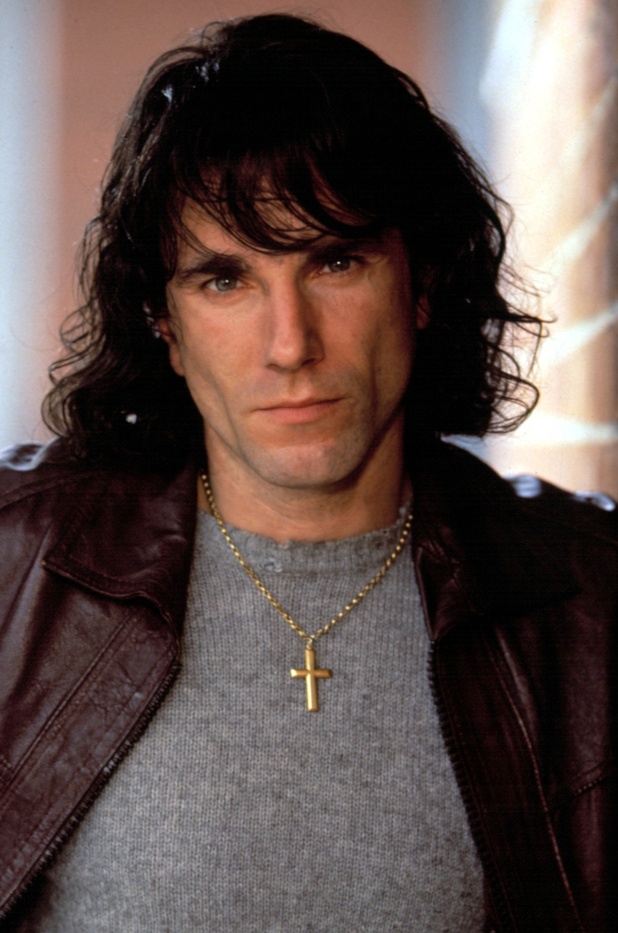
Daniel Day-Lewis as Gerry Conlon

Sheridan’s film displays the IRA as an antagonistic force to both the British and the Irish. They serve as a vigilantes that are often harsher on the locals than the British. Danny, Gerry’s friend, is kneecapped and later executed by the IRA for a petty crime that would have resulted in prison, not death, in the British system. After Gerry is caught stealing lead from roofs, the IRA threaten to kneecap him, as well. Giuseppe intervenes and sends his son to London more out of fear of the IRA than the British. Joe McAndrews, the IRA presence in the film, is depicted as a sinister and sadistic figure. He orders the bombing of the pub and doesn’t send out a warning.Yet, the British aren’t entirely free from blame in this film. Using brutal torture tactics reminiscent of internment, they forced confessions out of Conlon and his friends.


[Home]