“Up the Rebels”

The tenth season of Hawaii Five-O opened in 1977 with “Up the Rebels,” a premiere which featured Stephen Boyd taking on the role of Costigan, a Northern Irish splinter group terrorist in disguise. Costigan, as a sweet talking priest, manipulates an Irish-American Republican sympathizer in his attempt to procure explosives and evade capture by Hawaii Five-O. Boyd’s character is a prime example of the use of the IRA as stand-in terrorist organization. The organization is not fully defined, or even identified, but they are certainly armed and dangerous.
From 37:47 to 38:40 Costigan expresses his beliefs in total devotion to the cause
This episode plays on the blind-faith American support for the republican cause. The IRA employ euphemisms to hide their activities from the ignorant Americans by calling murder, “a tactical necessity” and any disgraceful act is simply, “an occupational hazard”. This is another instance where the IRA member is depicted as charming and persuasive; Fogarty quickly falls for Costigan and is blinded to the true nature of his cause. The appearance of Fogarty in the episode brings up Irish-American funding and support of the IRA. This also emphasizes the faith that some Americans have in their republican brethern across the sea. When referring to the cause Costigan says, “There’s no room for questions – or conscience.” This also typical of the IRA representation across different mediums; they feel that the strength of what it is they’re fighting for justifies any action and moral qualms are not necessary. This episode paints the IRA in a very dark lighting by bringing up the children killed in the bombing and suggesting their Machiavellian tendencies towards apathy and duplicity. The IRA member is also impersonating a priest which is a common American conception because most episodes begin with them spouting some notion of peace in Ireland. The distinction that’s important to make is that they almost always believe they can achieve peace through violence.
[Home]
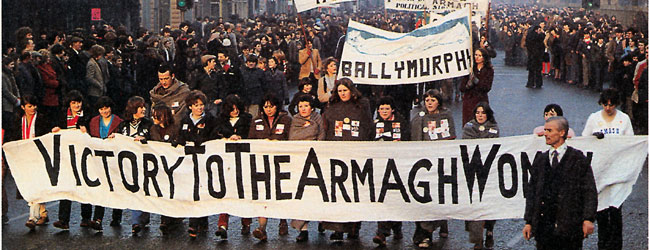
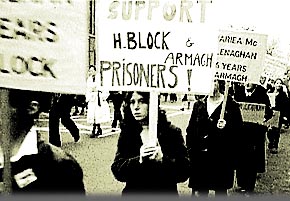
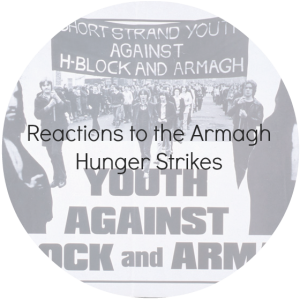
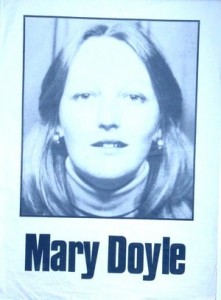 While seven men began a hunger strike on October 27th, 3 women from Armagh began the hunger strike on December 1, 1980. The three women who participated in the hunger strike were Mairead Farrell, Mairead Nugent, and Mary Doyle. The three girls were moved into a double cell together, and instead of the usual inedible cold prison food they were receiving before; they were fed with plates overflowing with piping hot food. After a couple of weeks on the hunger strike, the women heard rumors that the hunger strike was over, and that the men had ended the hunger strike. On December 19th they ended the hunger strike, and a sense of relief and happiness and satisfaction washed over the women believing that their demands would be met. But shortly after Christmas it became clear that the British had reneged on the agreement and had no intention of addressing the five demands. In January the women began discussing a second hunger strike, but with only 30 prisoners in their wing at the jail, they made the assessment that they would not be able to sustain a second hunger strike. But the women kept up with the no-work protest and supported their male comrades from their cells in Armagh. It is women who have been the backbone of the republican struggle. The women of Armagh were brave and sacrificed for their Irish freedom. For them, even though they received little attention, they still fought and struggled to ensure that their message was being heard.